
Most people can fly again after a pulmonary embolism once they are stable on blood thinners, breathing comfortably, and cleared by their treating doctor. That point is usually weeks away, not days. When a patient needs to move sooner, still needs oxygen, or has strain on the heart from the clot, a regular airline seat isn’t the safe choice. A flight nurse escort, a commercial stretcher, or a dedicated air ambulance can bridge that gap. The right one depends on how well the lungs and heart are coping.
A pulmonary embolism often happens far from home. A long flight, surgery, a hospital stay, or an injury on a trip can all set the stage for a clot, and families are left working out how to get a loved one home without risking another one. At Travel Care Air, our Medical Director speaks directly with the treating physician, and together they decide when the patient can travel and what support needs to come along.
Need to bring a loved one home after a pulmonary embolism? Contact Us and a coordinator will reply within 15 minutes.
What Is a Pulmonary Embolism?

A pulmonary embolism, or PE, is a blood clot that blocks an artery in the lungs. Most start as a deep vein thrombosis (DVT), a clot in a deep vein of the leg that breaks loose and travels to the lungs. A PE can range from a small clot that causes mild shortness of breath to a large clot that strains the right side of the heart and lowers oxygen levels and blood pressure.
Common triggers include:
- Recent surgery, especially hip, knee, or abdominal surgery
- Long periods without moving, including long flights and bed rest in the hospital
- Cancer and some cancer treatments, one reason we plan clot prevention into every air ambulance transport for cancer patients
- An injury, a broken leg, or a cast
- Pregnancy, hormone therapy, or a history of clots
The cause matters for travel planning, because why the clot formed often shapes how the patient should get home.
Can You Fly With a Blood Clot in Your Lungs?
Not right away, and not without your doctor’s clearance. In the first weeks after a PE, the clot is still being treated, the lungs may not move oxygen into the blood as well as usual, and the heart may be working harder than normal. Clearance usually rests on three things the treating team checks:
- Stable oxygen levels at rest and when walking, with no new or rising oxygen needs
- Heart function, with no significant strain on the right side of the heart
- Established blood thinners, taken reliably, with no bleeding problems
A small PE found early and treated well may be cleared sooner. A large PE, one that needed clot-busting treatment or an ICU stay, or one that strained the heart usually means a longer wait or a medically staffed flight. That’s why a recent PE sits on our list of health conditions you should not fly with.
How Soon Can You Fly After a Pulmonary Embolism?
There is no fixed date. Commonly cited guidance advises against flying, especially long-haul, for about the first four weeks after a PE. Short flights are sometimes allowed earlier and long flights later. The evidence behind any single number is limited, so the treating doctor sets the timing for each patient.
A medically staffed flight changes that timeline. An air ambulance carries oxygen, continuous monitoring, and a critical care crew, so the treating team may agree to move a patient before commercial travel would be safe. That’s often the case when the patient needs a specialist center, or when the family can’t wait a month in a foreign hospital or hotel.
Why Is Flying Harder on the Body After a Pulmonary Embolism?
- Lower cabin oxygen. Airliner cabins are pressurized to the equivalent of roughly 6,000 to 8,000 feet, so each breath carries less oxygen. Lungs with blocked areas have less reserve to make up the difference, the same problem we plan around for pneumonia and low oxygen levels.
- Extra work for the heart. Lower oxygen can raise pressure in the blood vessels of the lungs, which adds strain to a heart that may already be working hard because of the clot.
- Long periods of sitting. Hours in a seat slow circulation in the legs, the same conditions that can cause a clot in the first place.
- Distance from help. If breathing gets worse over an ocean, a commercial crew has limited equipment and may need to divert. A medical crew can treat it on the spot.
For many families, the hardest part is that the trip home looks a lot like the trip that caused the problem. Planning the right support takes that worry off the table.
Which Level of Medical Support Does a Pulmonary Embolism Patient Need?
The right option depends on how stable the patient is and how much care they need on the way. Our Medical Director and the treating physician decide together which level is safe.
- Flight nurse medical escort. For patients who are stable on blood thinners, have normal or near-normal oxygen levels, and can walk and sit for the trip, a critical care flight nurse travels beside them in a first- or business-class seat. The nurse watches breathing and oxygen levels, keeps medications on schedule, makes sure the patient moves regularly, and can provide low-flow oxygen. Our Flight Nurse Medical Escort service is often the right fit for a patient recovering well who shouldn’t travel alone.
- Commercial stretcher. For stable patients on international routes who need to lie flat, for example after a PE that followed a hip fracture or major surgery, the airline installs a stretcher in the cabin and two medical escorts provide care throughout the flight. Our Commercial Stretcher International service requires airline medical approval for each case.
- Air ambulance. For patients who still need more than low-flow oxygen, have strain on the heart, recently had clot-busting treatment or an ICU stay, or need to move before commercial travel would be safe, a dedicated air ambulance with an ICU-level crew is the safest choice. Some aircraft can also fly with a lower cabin altitude when the patient’s condition calls for it, depending on the aircraft, route, and distance.
If the patient is still in intensive care, the move is a hospital-to-hospital transfer rather than a trip home, and the planning steps are the ones in our guide on how to transfer an ICU patient to another hospital. When a PE comes alongside a heart problem, the same decisions we describe in flying after a heart attack apply.
What Does Our Medical Team Review Before the Flight?
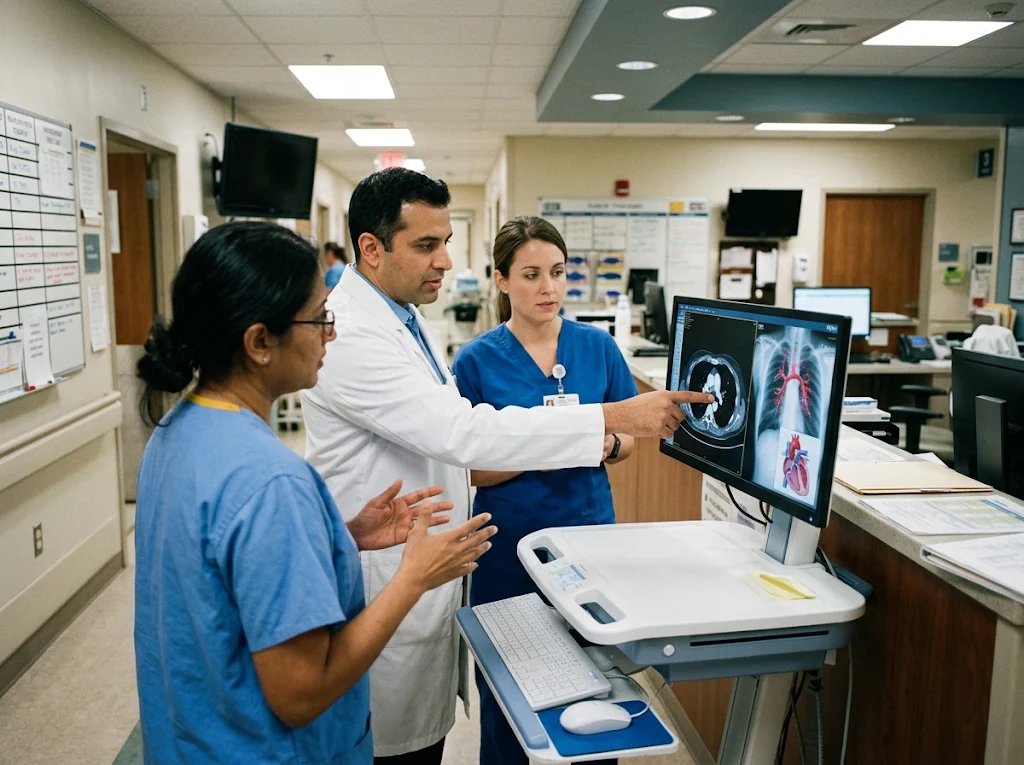
Before we recommend any plan, our Medical Director holds a peer-to-peer call with the treating physician. That review usually covers:
- The date of diagnosis and the size and location of the clot on imaging
- Whether the right side of the heart is strained, based on an echocardiogram and blood tests
- Treatment so far, including which blood thinner, when it started, and any clot-busting medication, filter, or procedure
- Oxygen levels at rest and with walking, and any current oxygen needs
- Bleeding risk while on blood thinners
- Whether a clot is still present in the legs
- What caused the clot: surgery, injury, cancer, or travel
- The receiving doctor’s plan for follow-up care
That information decides the crew, the equipment, and the timing. If the review shows the patient isn’t ready to fly, we tell the family plainly and reassess as they improve.
How Do We Lower the Risk of Another Clot on the Flight Home?
Preventing a second clot is part of every PE flight plan:
- Blood thinners on schedule. Our crew keeps every dose on time, including across time zones.
- Compression stockings when the treating doctor prescribes them.
- Movement. Escorted patients walk or do leg exercises at regular intervals. On a stretcher or air ambulance, the crew changes the patient’s position and moves the legs.
- Hydration, since dry cabin air and long travel days add to clot risk.
- Continuous watch for warning signs, including new shortness of breath, chest pain, a fast heart rate, falling oxygen levels, and new leg swelling.
On an air ambulance, the crew is matched to the patient: critical care flight nurses, flight paramedics, respiratory therapists, and physicians when needed, all trained in ACLS, PALS, and pre-hospital trauma care. The aircraft carries oxygen, monitors, IV pumps, and emergency medications, the same equipment on board an air ambulance we use for every critical transfer.
Every transfer is bed to bed. Before the aircraft launches, we arrange ground ambulances at both ends and confirm the receiving hospital or care team, so the patient is never left waiting at an airport.
What if the Pulmonary Embolism Happened After Surgery or Abroad?
A PE is one of the most common reasons a planned trip home after an operation changes. Surgery and the days of reduced movement afterward raise clot risk, which is why timing matters so much in air travel after surgery. When the clot follows hip or knee surgery, mobility limits and the clot together shape the plan, as we explain in why some hip and knee patients cannot fly commercial. If a PE is one of several complications after an operation, our page on when a patient deteriorates after surgery covers that kind of transfer.
A PE on vacation or a business trip adds language barriers, unfamiliar hospital systems, insurance questions, and distance from family. Our coordinators work with hospitals worldwide, and with U.S. Embassies and Consulates when needed, to gather records, line up the receiving doctor, and plan the safest flight home. See the regions we serve on our Where We Fly page, and our guide on how to arrange international medical repatriation for the paperwork side.
When Should I Contact Travel Care Air?
Call us as soon as the treating team starts talking about discharge or transfer, even if the patient isn’t ready to fly yet. Early contact gives our Medical Director time to review the case, gives insurers time to approve the transfer, and gives the receiving hospital time to prepare. Contact us right away if:
- Your loved one was diagnosed with a PE away from home and needs to get back to their own doctors
- The treating doctor has said commercial travel isn’t safe yet, or isn’t safe without medical support
- The patient still needs oxygen, had heart strain, or needed ICU care or clot-busting treatment
- The PE followed surgery, an injury, or cancer treatment and the patient can’t sit upright for a long flight
- You’re not sure which level of support is right and want a medical team to help decide
You can read about other families we’ve helped bring home in our Mission Stories.
Bring Your Loved One Home Safely

A pulmonary embolism is frightening, and the trip home shouldn’t add to the risk. Our medical team will review the case with the treating physician, plan clot prevention and oxygen for the whole journey, and handle every leg from bed to bed. Travel Care Air is available 24 hours a day, 7 days a week, 365 days a year. Contact us for a free consultation and flight quote or call U.S./Canada: 1-800-524-7633 | International: +1-715-479-8881.
Flying With a Pulmonary Embolism FAQ
Can you fly with a pulmonary embolism?
Not on a commercial flight in the first weeks after diagnosis, and not without your doctor’s clearance. Patients who need to move sooner, still need oxygen, or have heart strain usually travel with a flight nurse escort or by air ambulance.
How long after a pulmonary embolism can you fly?
It depends on the patient. Commonly cited guidance advises against flying, especially long-haul, for about the first four weeks. Clearance rests on stable oxygen levels, healthy heart function, and established blood thinners, and the treating doctor sets the timing.
Can you fly on blood thinners?
Yes. Most patients who fly after a PE are on blood thinners, and taking them exactly on schedule is part of what makes travel safer. Bring enough medication for the whole trip in your carry-on, along with a doctor’s letter.
Can flying cause a pulmonary embolism?
Long flights, generally more than about four hours, slightly raise the risk of blood clots, especially in people who already have risk factors such as recent surgery, cancer, or a past clot. For most healthy travelers the overall risk is low.
Can you fly home after a pulmonary embolism abroad?
Yes, once the treating doctors agree the patient is stable enough for the chosen level of support. Many patients fly home with a flight nurse escort or by air ambulance so they can recover near their own doctors and family.
Do you need oxygen to fly after a pulmonary embolism?
Some patients do. If oxygen levels are low at rest or drop with walking, the patient may need supplemental oxygen in flight, which airlines must approve in advance. Patients with higher oxygen needs are usually safer on an air ambulance.
When does a pulmonary embolism patient need an air ambulance instead of a commercial flight?
An air ambulance is usually the safer choice when the patient needs more than low-flow oxygen, has strain on the heart, recently had ICU care or clot-busting treatment, can’t sit upright, or needs to move before commercial travel would be safe.
Can a family member fly with the patient?
Often, yes. On a medical escort or commercial stretcher flight, family members can usually book seats on the same flight. On an air ambulance, a companion can often travel along, depending on aircraft space and the medical team’s approval. Ask during your first call.