
A hip or knee surgery does not automatically mean a patient cannot fly on a commercial airline. But when recovery is complicated by a blood clot risk, severe pain, limited mobility, infection, oxygen needs, or an inability to sit safely for hours, commercial travel may no longer be an appropriate option.
For families trying to bring a loved one home after an orthopedic emergency, the most important question is not simply “Can they get on a plane?” but “Can they complete the entire journey safely, with the position, monitoring, medication, and medical support they need?”
At Travel Care Air, we coordinate domestic and international medical transport for patients whose needs exceed what a standard airline seat can safely provide. Since 1980, we have helped families navigate the clinical and logistical details of getting a loved one home—bedside to bedside.
Need help now? Call Travel Care Air 24/7 at 1-800-524-7633 in the U.S. and Canada or +1-715-479-8881 internationally. Or contact us online today.
Why Flying After Surgery Is Different
After hip replacement, knee replacement, fracture repair, or another major orthopedic procedure, a patient may be medically stable in the hospital yet still not be safe for ordinary commercial travel. Recovery can involve swelling, restricted movement, pain medication, wound care, mobility limitations, and a heightened risk of venous thromboembolism (VTE), which includes deep vein thrombosis (DVT) and pulmonary embolism (PE).
Long periods of immobility can compound the problem. The CDC notes that travel lasting more than four hours—by air, car, train, or bus—can raise blood-clot concerns, particularly for people who already have risk factors such as recent surgery or limited mobility.
A commercial flight also involves more than the time in the air. Patients must manage:
- Getting from the hospital or hotel to the airport
- Checking in, clearing security, and waiting at the gate
- Transferring into a narrow airline seat or wheelchair
- Remaining seated during takeoff, landing, and turbulence
- Managing pain, swelling, medication schedules, and bathroom needs
- Navigating connections, delays, and a second ground transfer after landing
The DVT Risk After Hip or Knee Surgery
DVT is a blood clot that commonly forms in a deep vein of the leg. A clot can become dangerous if it breaks free and travels to the lungs, causing a pulmonary embolism. Recent surgery, reduced mobility, dehydration, prior clotting history, cancer, certain medications, and lengthy travel can all affect an individual patient’s risk profile.
Research does not support a one-size-fits-all rule that every hip or knee patient must avoid flying. Available evidence remains limited, and recommendations vary; current orthopedic literature emphasizes an individualized assessment based on the timing of surgery, the length of travel, and the patient’s personal risk factors.
That nuance matters. Some patients can travel soon after joint surgery with their surgeon’s clearance, appropriate clot-prevention medication, compression therapy, hydration, and the ability to move regularly. Others may need a different transportation plan because they cannot safely sit upright, move their legs, tolerate a lengthy airport process, or receive adequate support in a commercial cabin.
When Commercial Flying May Not Be Safe
The treating surgeon and transport clinicians should determine whether a patient can fly and what level of transport is appropriate. Families should be especially cautious when a loved one has any of the following concerns:
- A diagnosed DVT, pulmonary embolism, or suspected blood clot
- New shortness of breath, chest pain, fainting, or unexplained rapid heart rate
- A recent surgical complication, including infection, wound drainage, bleeding, severe swelling, or uncontrolled pain
- A need to remain flat or significantly reclined because sitting upright could worsen pain, disrupt precautions, or compromise the surgical site
- A leg cast, brace, external fixation device, or immobilizer that makes ordinary airline seating difficult or unsafe
- A need for oxygen, IV medication, complex wound care, or continuous clinical monitoring
- Inability to transfer safely from a bed to a wheelchair, wheelchair to aircraft seat, or seat to restroom
- Cognitive impairment, delirium, or sedation that makes commercial travel difficult to manage safely
- A long international itinerary with connections, delays, language barriers, or limited access to appropriate care
Why a Standard Airline Seat Can Be a Problem
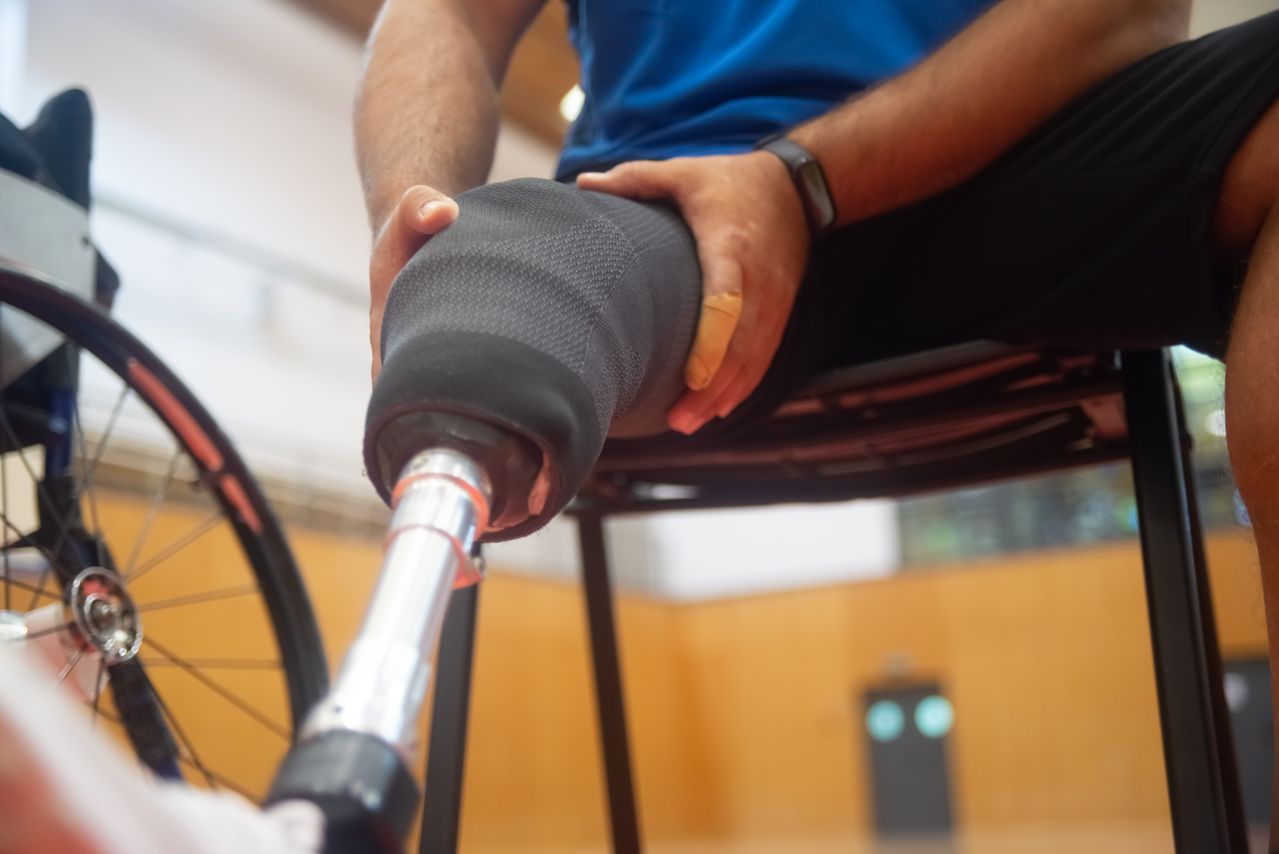
Commercial airline cabins are designed for the general traveling public, not for patients in the early stages of orthopedic recovery. Even a business-class seat may not solve the central clinical problems of inadequate room to elevate a swollen leg, inability to lie flat, restricted movement, lack of privacy for personal care, and no dedicated medical team continuously monitoring the patient.
A patient who cannot bend a knee comfortably, bear weight safely, or transfer independently may face painful and unsafe transitions at every stage of a commercial trip. In addition, commercial crews are trained for in-flight emergencies, but an airliner is not equipped as a mobile clinical environment for continuous postoperative care.
For patients who are stable but cannot stay upright, a commercial airline stretcher with medical escorts may be a practical option on eligible international routes. Travel Care Air coordinates these services for patients who need a secured stretcher and medical professionals during the flight but do not require the full capabilities of a private air ambulance.
Choosing the Right Transport Option
| Transport option | May be appropriate when | May not be enough when |
| Commercial flight with family assistance | The patient is cleared by their physician, can sit upright, transfer safely, walk or perform leg exercises, and does not need medical monitoring | Pain, limited mobility, clotting concerns, or complex care make an airline seat unsafe |
| Commercial medical escort | The patient is stable but benefits from a trained clinician’s help with medications, mobility, and in-flight observation | The patient cannot sit upright, needs a stretcher, oxygen, IV therapy, or a higher level of care |
| Commercial airline stretcher | The patient must lie down but is stable enough for commercial airline transport and the route supports stretcher service | The patient needs intensive monitoring, complex equipment, or cannot tolerate the limitations of commercial operations |
| Private air ambulance | The patient needs a stretcher, continuous medical care, specialized equipment, oxygen, medication management, or a controlled bedside-to-bedside transfer | Not every postoperative patient needs this level of service; a clinical review determines medical necessity |
What an Air Ambulance Changes
A private air ambulance gives a recovering hip or knee patient a medically managed environment rather than an ordinary passenger journey. The patient travels on a stretcher, accompanied by a medical crew matched to their needs, with equipment and medications planned before departure.
For orthopedic cases, that can mean:
- A comfortable, protected position throughout the flight
- Continuous monitoring of vital signs and symptoms
- Oxygen or respiratory support when clinically indicated
- Medication and pain-management support
- Attention to hydration, circulation, and postoperative precautions
- Help with wound care, mobility restrictions, and transfers
- Coordination with ground ambulances and the receiving hospital or rehabilitation facility
Just as important, Travel Care Air coordinates the handoffs. We arrange the transport from the sending bedside to the aircraft and from the aircraft to the receiving destination, reducing the number of unsupported transitions a vulnerable patient must make.
Questions to Ask Before Booking After Orthopedic Complications
Before making travel plans after a hip or knee procedure, ask the treating team and transport provider:
- Has the surgeon cleared the patient specifically for air travel?
- Does the patient have any signs or history of DVT or pulmonary embolism?
- Can the patient safely sit upright for the expected duration of the trip?
- Can they walk, transfer, or perform in-seat circulation exercises?
- Are anticoagulants, compression stockings, or other prevention measures prescribed?
- Does the patient need oxygen, IV medications, wound care, or monitoring?
- What happens if there is a delay, missed connection, or worsening pain during travel?
- Is the final destination a home, rehabilitation center, skilled nursing facility, or hospital—and has it accepted the patient?
The answer may be a commercial seat, a nurse escort, a commercial stretcher, or a dedicated air ambulance. The goal is not to choose the largest service. It is to choose the level of care that safely matches the patient’s condition.
Contact Travel Care Air

When someone is recovering from orthopedic surgery far from home, families often feel pressure to make quick arrangements. But an early conversation can create better options and prevent a rushed decision when pain, swelling, or a complication worsens.
Travel Care Air reviews each case individually, coordinates with treating providers, and helps families understand whether a commercial medical escort, airline stretcher, or private air ambulance is the right fit. We are available 24/7 for domestic transfers and international medical repatriation.
To learn more about the patients and families we have helped, visit our Mission Stories. You can also read our guide to medical repatriation and our overview of commercial stretcher and medical escort flights.
Call Travel Care Air at 1-800-524-7633 (U.S./Canada) or +1-715-479-8881 (international) for a no-obligation medical transport consultation. Or contact us online today.
Frequently Asked Questions About Flying After Hip or Knee Surgery
Can I fly commercially after hip or knee replacement surgery?
Some patients can fly commercially after joint replacement, but clearance should come from the treating surgeon based on the patient’s recovery, mobility, clot-prevention plan, symptoms, and the length of the trip. There is no single safe timeline for every patient, because personal risk factors and postoperative complications matter.
Why is DVT a concern after orthopedic surgery?
A DVT is a blood clot in a deep vein, usually in the leg. Recent surgery and reduced mobility can raise the risk, and prolonged travel may add to it because patients remain seated for extended periods.
What symptoms could signal a blood clot?
Potential DVT symptoms include unexplained leg swelling, pain or tenderness, warmth, and redness or discoloration. Symptoms such as sudden trouble breathing, chest pain, a rapid or irregular heartbeat, coughing up blood, lightheadedness, or fainting can indicate a pulmonary embolism and require immediate medical attention.
Does every patient with a hip or knee replacement need an air ambulance?
No. Many patients can travel with physician clearance and appropriate precautions, while others may need a commercial medical escort or commercial airline stretcher. A private air ambulance is generally considered when the patient needs a stretcher, continuous monitoring, oxygen, specialized equipment, or a more controlled medical environment during transport.
When might a commercial medical escort be appropriate?
A commercial medical escort may be appropriate for a stable, non-emergency patient who can travel on a commercial airline but needs trained support with mobility, medications, airline logistics, or in-flight observation. The patient’s clinical needs, equipment requirements, and airline medical approval all help determine whether this is safe.
What if the patient cannot sit upright?
An international commercial airline stretcher may be an option for a stable patient who cannot remain seated for the flight. The stretcher is secured in the aircraft cabin, and Travel Care Air typically assigns two clinician escorts for continuous care; airline approval, route availability, and advance planning are required.
How long does it take to arrange a commercial stretcher flight?
Commercial stretcher transport commonly requires about 72 hours to one week to arrange, depending on the patient’s location and condition, airline medical approval, available routes, and aircraft space. Airlines typically need several business days to review records and confirm acceptance.
Can Travel Care Air arrange the full trip?
Yes. Travel Care Air coordinates appropriate medical flight options and can help manage the practical details surrounding a medically necessary journey, including clinical planning and travel coordination. The team is available 24/7 at 1-800-524-7633 in the U.S. and Canada or +1-715-479-8881 internationally or via online message.