
If you are on a transplant waiting list, you already know the call can come at any hour. What surprises most families is how fast everything moves after it does. The window between “we have an organ for you” and “you need to be here” is often measured in a handful of hours, and if you live far from your transplant center, the way you travel becomes part of the medical plan itself.
We have coordinated time-critical medical flights since 1980, including transports for transplant recipients and post-surgical patients. We can tell you plainly that the families who move fastest when the call comes are almost always the ones who planned before it.
If you are on a list now and live more than a few hours from your center, talk to us about a standby plan before you need one. Contact us or call U.S./Canada: 1-800-524-7633 | International: +1-715-479-8881.
What the Call Actually Means
When your transplant coordinator calls, a donor organ has been matched to you. Your team will walk you through the offer, answer your questions, and ask you to accept or decline, and that decision is usually expected quickly, sometimes within about an hour.
Accepting is only the first deadline. The second is getting to the hospital. Many centers need the recipient physically present within two to six hours of the offer. Hearts and lungs are typically transplanted within four to six hours of recovery, livers within about eight to twelve, and kidneys within a day or so, which is why arrival deadlines are strictest for heart and lung candidates. Our guide to how long organs are viable for transplant breaks down those windows organ by organ.
Two more things to know about the call itself:
- It may come more than once, and it may be a false alarm. Organs are evaluated after recovery, and a match can be stood down if the organ is not suitable.
- Your team needs to reach you. Keep your phone charged and nearby, keep your contact information current with the center, and give them at least one backup person who always knows where you are.
How Much Time Do You Really Have?
To calculate, start with the arrival deadline your center gave you at your listing appointment – most programs spell this out – and work backward.
| Distance from your center | Driving | Commercial flight | Private medical transport |
| Under 2 hours | Usually fine | Rarely needed | Rarely needed |
| 2 to 5 hours | Possible but tiring | Works if flights are frequent | Comfortable, schedule-proof |
| 5 to 10 hours | Often unrealistic | Risky — few last-minute seats, delays | Usually the right fit |
| Overseas | Not an option | Rarely meets the window | Often the only reliable route |
Last-minute flight seats exist when going commercial, but a single delayed or canceled flight can end the opportunity. If you are counting on commercial travel, know every flight that arrives near your center each day, on more than one airline, and have a plan for getting from the airport to the hospital at 3 a.m. For lung and heart candidates especially important.
If the patient is too sick to sit upright for hours, needs oxygen, or cannot manage stairs and terminals, a commercial itinerary is not realistic altogether. In those cases, the right question is not “how do we fly?” but “what level of care does the patient need in the air?”, which is exactly what an air ambulance crew is built for and what we specialize in.
What to Have Ready Before the Call
- A packed go-bag, you’ll need several days of clothes, phone chargers, toiletries, a small amount of cash, and your insurance card and ID.
- Medications in original bottles, packed in your carry-on, with an up-to-date written medication list.
- A document folder: medication list, medical history summary, transplant center contact numbers, your coordinator’s direct line, and your surgeon’s name.
- A travel plan on paper: primary and backup routes or flights, the airport-to-hospital plan at your destination, and pre-saved rides or rental options.
- A driver with a backup: someone who can leave on a moment’s notice, day or night, and a second person in case the first is unreachable.
- A family plan: who cares for children and pets, who notifies your employer, and who travels with the patient. Decide this before the call, not during it.
- A pre-arranged transport option if you live far from your center (more on this below).
If the patient travels with oxygen, mobility equipment, or refrigerated medications, the go-bag planning gets more specific. Our guide to what families should pack for a medical flight covers those details.
Your Transport Options When the Call Comes
Driving. For candidates within a few hours of the center, a car with a rested, calm driver is often the simplest and most reliable option. Build in a backup route and a backup driver, and stop as often as the patient needs.
Commercial flight, with or without an escort. If the patient is stable and mobile, a last-minute commercial flight can work but there are risks. If the patient needs help with medications, mobility, oxygen, or navigating airports, a medical escort flight with a flight nurse or physician solves that while keeping costs closer to commercial. If you are weighing road versus air generally, our comparison of ground transport vs. air ambulance can help.
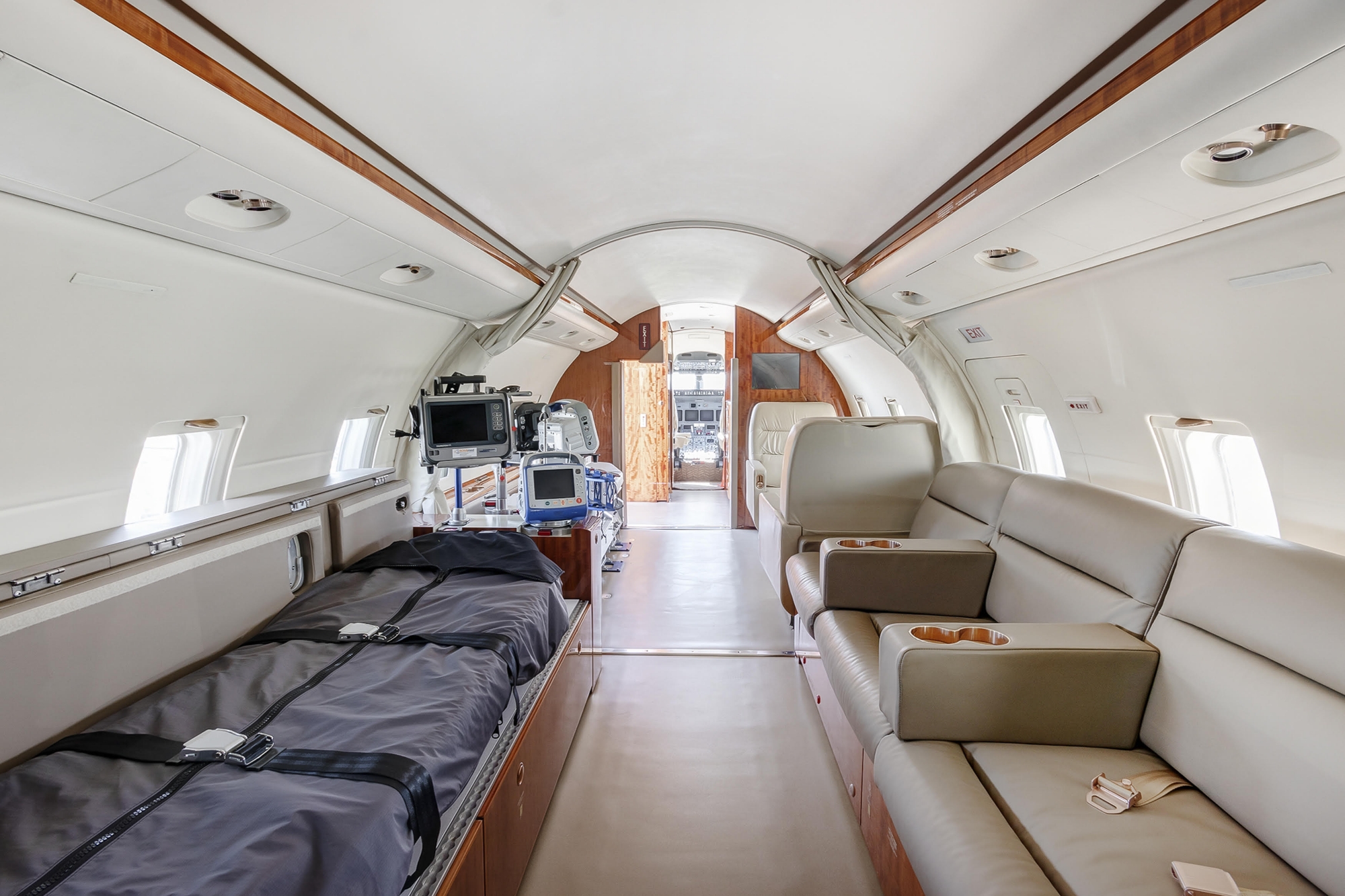
Private air ambulance or medical charter. When the window is tight, the distance is long, or the patient needs monitoring in the air, a dedicated medical flight is the best option. Wheels-up times of two hours or less are realistic for a prepared operator; the aircraft goes where you need it rather than where the schedule happens to go, and a family member can almost always fly along. For patients who are more fragile – which many long-term transplant candidates are – the crew, equipment, and cabin setup are matched to the patient before departure.
Living-donor candidates. If your transplant is scheduled rather than call-based, transport is planned, but the same care-level questions apply. Our page on liver transplant travel covers that scenario in detail.
Set Up a Standby Plan While You Wait
The single best move a distant candidate can make is to pre-plan transport before the call. Give a transport provider your medical summary, your center’s name and arrival deadline, your preferred departure airport, and your payer information while nothing is urgent. Then, when the call comes, you make one phone call instead of researching companies under pressure with no time to compare crews, safety records, or pricing.
We keep patient files exactly this way, and it routinely cuts hours off a family’s response time. When you call, ask the provider these questions:
- How quickly can you realistically be wheels-up from my airport?
- Who will be on the crew, and what is their training?
- Can a family member fly with the patient?
- What does the quote include, end to end?
- What happens if the transplant is canceled after we take off?
Coming Home Afterward
The trip home is a separate conversation. After major transplant surgery, many patients cannot fly commercially for weeks, need isolation-conscious handling, or require monitoring on the way home. Our guide to post-transplant air ambulance transport covers how liver, lung, and heart recipients get home safely once the surgical team clears travel and how a medical travel companion can help once the patient is stable enough for a commercial itinerary.
Costs and Coverage
Time-critical charter and air ambulance flights are significant expenses, and coverage varies widely — health insurance may cover medically necessary air ambulance transport under some plans, and some transplant programs have travel assistance resources for candidates. Ask your center what they offer, review any travel or evacuation policies you hold, and ask your transport provider for a written, itemized quote before you commit. Ask, too, about stand-by or pre-registration arrangements, which cost nothing to set up.
Frequently Asked Questions
How fast do I have to arrive at my transplant center?
It depends on the organ and your program. Many centers want recipients on site within two to six hours of the offer, and heart and lung candidates usually have the tightest windows. Your center told you your deadline at your listing visit — confirm it in writing so your family can plan around it.
Can I fly commercially when the call comes?
Sometimes, if you live near a well-served airport and the timing works. The risk is delay: missed connections and cancellations can cost you the organ. Have backup flights identified, and consider a medical escort if the patient needs help in the terminals or in the air.
Can a family member fly with the patient?
On a private medical transport, almost always yes — space permitting, one or two family members can travel with the patient. This matters: candidates rarely travel alone, and being met by a familiar face at the airport is part of the plan, not an extra.
What if the organ is not usable after I travel?
It happens. Organs are examined after recovery, and matches are occasionally stood down. Traveling and being turned back is an accepted part of the process. Your transplant team would rather have you there and not need surgery than need you and have you stuck in traffic.
Should I arrange transport before I get the call?
If you live more than a few hours from your center, yes. Pre-registering your medical details, destination, and preferences with a transport provider turns a scramble into a single phone call.
What does the patient need in flight?
It depends on their condition: many candidates travel with oxygen, medications on a schedule, or mobility limits. A properly planned medical flight matches the crew, equipment, and cabin setup to those needs before departure — that is the difference between transport and a ride.
When Every Minute Matters, So Does the Plan

You cannot control the timing, but you can control the preparation with the packed bag, the printed flight plan, the backup driver, the standby transport file. Travel Care Air has been flying time-critical medical missions since 1980, with crews trained in advanced cardiac life support, pediatric advanced life support, and pre-hospital trauma care, and we are available 24 hours a day, 365 days a year.
Contact us for a free consultation and flight quote or call U.S./Canada: 1-800-524-7633 | International: +1-715-479-8881 — even if you just want to understand your options while you wait. You can also read real mission stories from families we have brought home.
This article is educational and does not replace the guidance of your transplant team. Always follow your center’s instructions on arrival timing and travel.