
A transplant is supposed to be the end of a long, hard road. But for many families, there’s one more journey after the surgery itself and that’s getting home. Transplant centers are often hundreds or thousands of miles from where a patient actually lives, and when discharge day comes, the question becomes “how do we get there safely with a brand-new organ and a brand-new immune system?”
If you’re facing that question for a loved one, you should know two things up front. First, this kind of trip is entirely doable. Second, it deserves more planning than a normal flight, because a transplant recipient isn’t a normal passenger.
Planning transport after a transplant? Call us 24/7/365 at 1-800-524-7633 (U.S./Canada) or +1-715-479-8881 (International) for a free consultation or contact us online. We’ll coordinate directly with the transplant team so the travel plan matches the recovery plan.
Why Post-Transplant Travel Is Different
Everything about post-transplant travel comes back to one word, which is immunosuppression. The medications that keep the body from rejecting a new organ also weaken its defenses against infection, and the CDC is clear that infection risk for solid organ transplant recipients is greatest in the first year after transplant. That’s why transplant teams generally advise waiting before any discretionary travel; many programs hold patients back from non-essential trips for six months to a year, sometimes longer depending on the organ.
But going home after surgery is necessary. And that’s exactly why the trip should be planned around the patient’s vulnerabilities rather than around airline schedules. The main risks in transit are:
- Infection exposure. Airports, crowds, and recycled cabin air are a real concern for someone on anti-rejection medications, especially early in recovery.
- Medication timing. Anti-rejection drugs run on strict schedules, and missed or delayed doses matter. Long trips and time zone changes have to be planned around the medication clock, not the other way around.
- Post-surgical recovery. A transplant is major surgery. Wound healing, clot risk on trips over a few hours, pain management, and limited mobility all apply here just as they do after any big operation.
- Distance from the transplant team. Early in recovery, the transplant center is the safety net. The farther the patient travels, the more important it is that a plan exists for what happens if something changes mid-trip.
What Each Organ Changes About the Plan
Liver, lung, and heart recipients share the immunosuppression concerns above, but each brings its own considerations to a flight.
Liver recipients
Liver transplant patients are often recovering from a long period of illness before the surgery itself, which means strength, stamina, and nutrition may still be rebuilding on travel day. Fluid balance and kidney function need monitoring, and the medical team will want recent lab work reviewed before anyone signs off on a long trip.
Lung recipients
New lungs deserve the most cautious conversation about flight itself. Cabin pressure at altitude means less available oxygen than at sea level, and lung recipients may need a pre-flight oxygen assessment to determine whether supplemental oxygen is required in the air. This is also the group where infection prevention matters most visibly – a well-fitted N95 or KN95 mask in airports and on board is standard CDC advice for immunocompromised travelers, and it applies doubly here.
Heart recipients
A transplanted heart works, but it works differently as it’s surgically disconnected from the nerves that normally regulate heart rate, so its response to stress and exertion is blunted. That doesn’t prevent flying in a pressurized aircraft; it means monitoring during travel matters, and the crew needs to understand what a normal-looking reading does and doesn’t tell them about a denervated heart.
Commercial Flight with an Escort, or a Dedicated Air Ambulance?
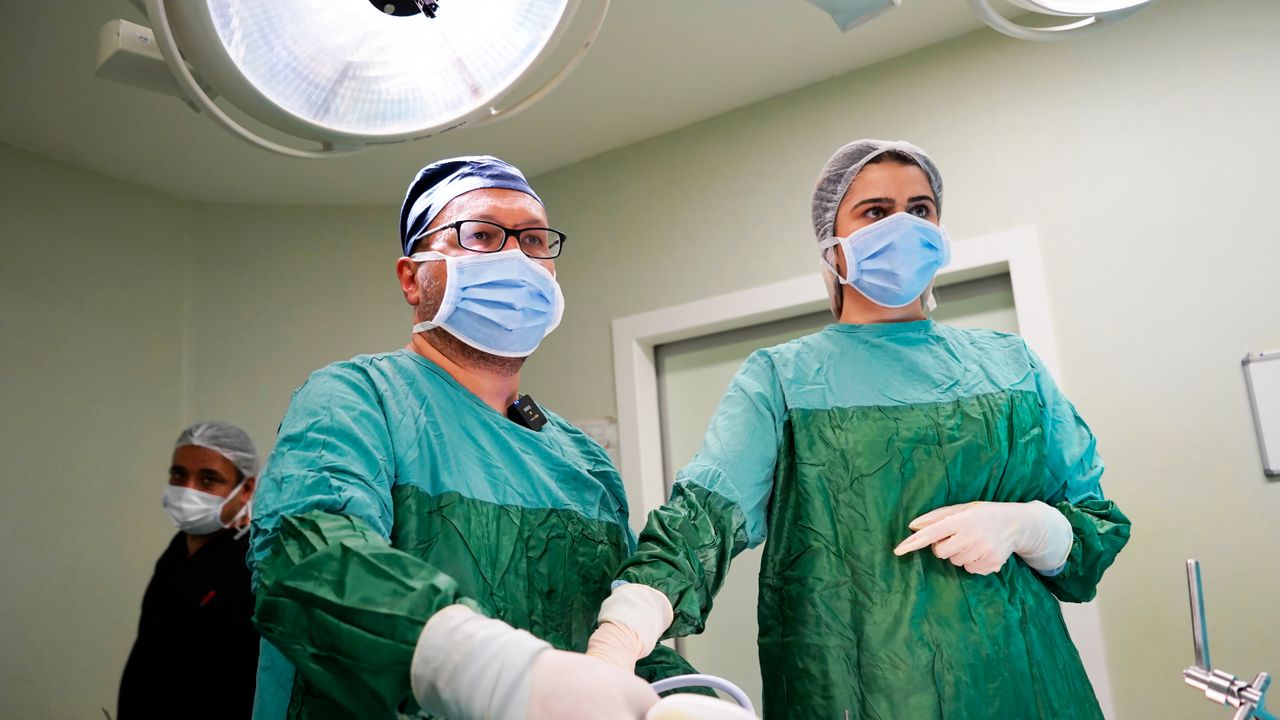
Most stable post-transplant patients going home weeks after surgery don’t need a private aircraft – they need a professional beside them on a commercial one. A medical escort handles the airline clearance, oxygen approval if needed, medication schedule, wheelchair logistics, and monitoring from bedside to bedside, at a fraction of the cost of a dedicated flight.
A dedicated air ambulance becomes the right call when the patient can’t sit upright for a full itinerary, needs continuous monitoring or intervention, is earlier in recovery with more moving parts, or has a complication that makes a crowded cabin a genuine risk rather than an inconvenience. Our guides on ground transport vs. air ambulance and how air medical transport works, step by step walk through how that decision gets made.
The Medication Question Deserves Its Own Plan
Ask any transplant coordinator what families get wrong about travel, and medications come up fast. The rules are simple but absolute:
- Every medication travels in carry-on, in its original labeled bottle – never in checked luggage
- Bring several extra days of supply in case of delays
- Refrigerated medications need a cooler bag with freezer packs, planned in advance
- Dosing times get mapped onto the travel day, including time zone changes, before departure
- A letter from the transplant office listing medications and supplies makes airport security dramatically smoother
If a dose would fall mid-flight, the medical team plans for it rather than improvising at 30,000 feet.
How the Trip Actually Comes Together
Whether the answer is an escorted commercial flight or a dedicated aircraft, the sequence looks the same:
- Transplant team sign-off. Nothing is booked until the patient’s own team confirms they’re cleared to travel and shares current labs, medication lists, and any restrictions.
- Medical review. Our medical director reviews the case and determines what level of support the trip requires.
- The route is built around the patient. Airport choices, ground transfers at both ends, oxygen and equipment needs, and medication timing all get planned as one continuous chain.
- Bedside-to-bedside transport. The patient is never handed off to a stranger or left to navigate an airport alone – the same standard described in our guide on arranging medical transport across borders for international cases.
- Arrival and handoff. The receiving facility or home care setup is confirmed before departure, so landing is an ending, not a new problem.
If you’re preparing for the trip, our packing guide for medical flights covers the details families most often forget.
Getting Home Is Part of the Recovery

The families we help after a transplant have usually already been through months of waiting, hoping, and hospital corridors. The trip home shouldn’t be the hard part. Since 1980, we’ve helped transplant recipients travel safely between centers, hospitals, and home with the same care plan running from one bedside to the other.
Call us anytime, 24/7/365: U.S./Canada 1-800-524-7633, or International +1-715-479-8881, or contact us online for a free consultation and quote. To see how other families made the journey home after a life-changing surgery, read our mission stories.
Frequently Asked Questions
How soon after a transplant can someone fly?
There’s no single number, and the transplant team’s answer is the only one that counts. It depends on the organ, the recovery, the reason for the trip, and how it’s made. Coming home from a distant transplant center is very different from discretionary vacation travel — which most teams ask patients to postpone for months.
Is a commercial flight safe for someone who’s immunosuppressed?
It can be, with the right precautions: masks in crowded spaces, hand hygiene, wiped-down surfaces, and a medical escort managing exposure and logistics. For patients very early in recovery or with complications, a dedicated aircraft removes the crowd from the equation entirely.
Who decides if the patient needs oxygen during the flight?
The transplant team and the transport medical director, based on a pre-flight assessment. This matters most for lung recipients, but it can apply to any patient whose oxygen levels respond unpredictably to cabin altitude.
What happens if the patient feels unwell mid-flight?
That’s the entire reason for flying with a medical professional. An escort or flight crew can assess, intervene, and communicate with the transplant center in real time — something no family member should have to improvise alone.
Will insurance cover post-transplant transport home?
Sometimes. Coverage depends on the policy, documented medical necessity, and how the transport is classified. It’s worth asking early, and we help families understand their options and provide the documentation insurers ask for.