
Moving a parent with dementia closer to family, bringing them home after a hospital stay, or getting them to a new memory care community often means a long trip. For many families, that trip is the part they dread most. Airports are loud, crowded, and full of changes, and for someone living with Alzheimer’s disease or another form of dementia, that can lead to fear, agitation, wandering, or sudden confusion. Flying with a loved one who has dementia is possible, but it usually goes best with a plan, and often with a trained medical escort at their side.
Travel Care Air has helped older adults travel safely since 1980. For travelers with dementia, we plan around routines, medications, rest, and the moments most likely to cause distress, whether that means a nurse escort on a commercial flight or an air ambulance for a loved one who is also medically fragile. Consultations are free and available 24/7/365. Contact Travel Care Air or call U.S./Canada: 1-800-524-7633 | International: +1-715-479-8881.
Can People With Dementia Fly?
Yes, many people with dementia fly, especially in the earlier stages and with a familiar companion. The question isn’t the diagnosis itself. It’s how well your loved one handles unfamiliar places, long days, and changes in routine, and whether they have other health conditions that need attention.
Flying tends to get harder as dementia progresses. A person who was fine on a short flight last year may struggle now, especially with a long trip, connections, or overnight travel. Their doctor can help you decide whether flying is a good idea at all, and what support they’ll need if it is.
Why Is Air Travel Hard for People With Dementia?
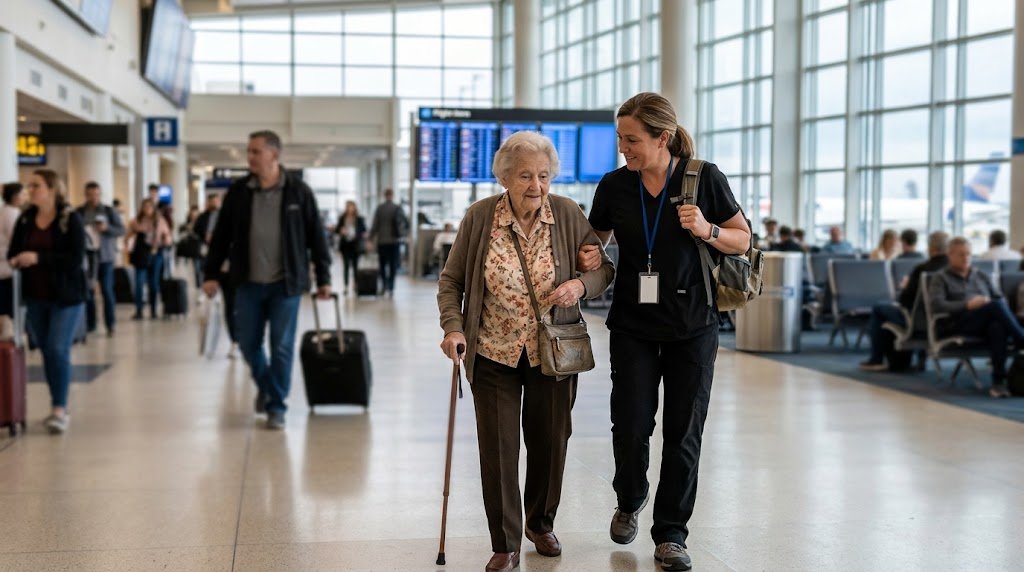 Air travel combines nearly everything that can unsettle someone with dementia:
- Unfamiliar, busy places. Airports are crowded, loud, and confusing even for healthy travelers.
- Security screening. Being separated from belongings, touched by strangers, or asked to follow quick instructions can be frightening.
- Long waits and delays. Unexpected changes are hard to explain and harder to accept.
- Disrupted routines. Missed meals, medications at the wrong time, and lost sleep can all make symptoms worse.
- Restrooms. Finding, using, and returning from an unfamiliar restroom can cause distress or wandering.
- Confined cabins. Being seated for hours in a small space can lead to restlessness or agitation.
- Lower cabin oxygen and dehydration, which can add to confusion.
Older adults with dementia also have a higher risk of delirium, a sudden, more severe confusion that can be triggered by stress, illness, dehydration, sleep loss, or unfamiliar surroundings. Delirium is a medical problem that needs attention, not just a bad day, and it’s one of the reasons a trained escort matters.
When Does Someone With Dementia Need a Medical Escort?
A family member can often handle a short, simple trip in the early stages. A medical escort becomes the safer choice when your loved one:
- Gets agitated, anxious, or frightened in new places
- Has wandered or tried to leave unexpectedly
- Needs help with medications, especially on a set schedule
- Needs help with toileting, eating, or mobility
- Has other health conditions, such as heart disease, diabetes, or breathing problems
- Is recovering from a hospital stay, fall, or infection
- Is traveling a long distance or with connections
- Doesn’t have a family member available to travel with them
A flight nurse medical escort travels with your loved one from door to door on a commercial flight, managing medications, keeping them calm and oriented, handling the airport, and watching for signs of delirium or other medical problems. For travelers who are fairly independent and mainly need reassurance and a steady companion, a medical traveling partner may be enough. See our medical escort flight guide for how escorted travel works step by step.
What Does a Medical Escort Do for a Traveler With Dementia?
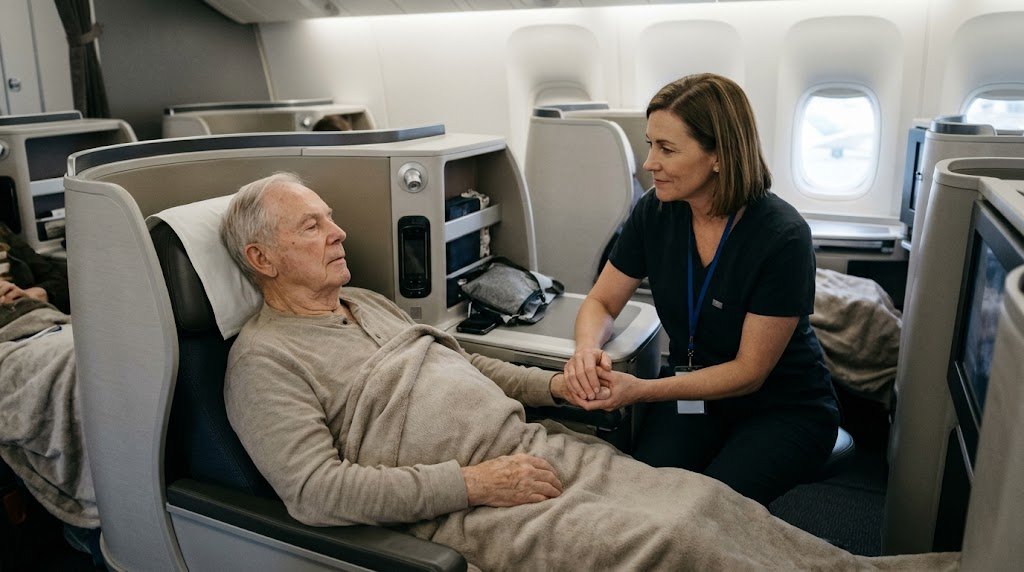
A good escort does far more than sit in the next seat. Our flight nurses:
- Meet the traveler where they are, at home, a hospital, or a care facility, and stay with them until the handoff at the destination
- Keep routines as normal as possible, including meals, medications, and rest
- Handle check-in, security, and boarding, including requesting wheelchair assistance and early boarding
- Stay calm and consistent, using simple, reassuring words and redirection when needed
- Manage medications on schedule, including across time zones
- Help with restrooms, meals, and mobility while protecting the traveler’s dignity
- Watch for delirium, dehydration, falls, and other medical changes
- Communicate with the family and the receiving facility throughout the trip
For families, that means one less thing to manage during an already emotional move.
When Is an Air Ambulance Needed for Someone With Dementia?
A commercial flight, even with an escort, isn’t always safe. An air ambulance is usually the better choice when your loved one:
- Is hospitalized and needs to transfer to another hospital or facility
- Has severe agitation or delirium that can’t be managed safely in a public cabin
- Cannot sit upright for a commercial flight
- Needs oxygen, IV medications, or close monitoring
- Has a serious injury or illness, such as a fall, fracture, or pneumonia
- Needs to avoid crowds because of infection risk or distress
A private aircraft offers a quiet, controlled space, with no terminals, security lines, or crowded cabins, and a medical crew focused entirely on your loved one. Our elderly medical transport page covers more on how we support older adults.
Why Does Every Traveler With Dementia Need a Medical Review?
A medical professional reviews every patient before any transport plan is finalized. For a traveler with dementia, that review looks at:
- The stage of dementia and how your loved one usually handles change
- Any history of agitation, wandering, or delirium
- Current medications and timing
- Other health conditions and mobility
- Recent hospital stays, falls, or infections
- The destination and who will be there to receive them
Our Medical Director speaks with the treating physician when needed to make sure the travel plan, and the level of support, matches your loved one’s needs.
How Can Families Prepare Someone With Dementia for a Flight?
Whether or not you use an escort, these steps help:
- Talk to their doctor first, about whether to fly and about medications for the trip.
- Choose flights carefully. Nonstop flights at your loved one’s best time of day are usually easiest.
- Request assistance from the airline, including wheelchair service, early boarding, and seating near the restroom.
- Pack familiar comforts: a favorite sweater, photos, music with headphones, or a familiar snack.
- Carry an ID and contact card in their pocket, and consider a medical ID bracelet.
- Bring a medication list and enough medication for delays, in a carry-on bag.
- Keep explanations short and calm. Too much detail too early can increase anxiety.
- Plan for the arrival. Make sure the new home or care facility is ready, so the first day ends calmly.
- Bring copies of a health care power of attorney or other legal documents.
What If a Loved One With Dementia Becomes Ill While Traveling?
A trip or vacation can turn into a crisis if someone with dementia gets sick, falls, or develops delirium far from home. Unfamiliar hospitals can make confusion worse, and families often want their loved one back with the doctors and caregivers who know them.
Travel Care Air coordinates medical flights home across six continents, handling the medical review, the receiving facility, and ground transport at both ends. Learn more in Medical Repatriation Explained, and read how other families made it home in our Mission Stories.
What Does a Medical Escort Cost for a Traveler With Dementia?
A flight nurse escort on a commercial flight costs significantly less than a private air ambulance. The price depends on distance, the airline, the class of service, and how much time the escort spends with your loved one before and after the flight. An air ambulance quote from Travel Care Air typically includes the aircraft, pilots, the full medical crew, ground ambulances at both ends, and all logistics coordination, with no hidden fees.
For more, see How Much Does a Medevac Cost and Will My Health Insurance Pay for an Air Ambulance?
When Should I Contact Travel Care Air?
Contact us when you’re planning a move for a loved one with dementia, when you’re worried about how they’ll handle a flight, or when they’re hospitalized away from home and need to get back. You can fill out a brief contact form on our website and receive a response within 15 minutes, or call directly: U.S./Canada: 1-800-524-7633 | International: +1-715-479-8881.
A Calmer Way to Travel With Dementia

Moving a loved one with dementia is emotional enough without worrying about every moment in the airport. A trained escort can make the journey calmer and safer, and when travel isn’t safe on a commercial flight, an air ambulance gives your loved one a quiet, private alternative. Travel Care Air will help you choose the right option.
Medical needs don’t follow business hours, and neither do we. Travel Care Air is available 24 hours a day, 7 days a week, 365 days a year. Contact us for a free consultation and quote or call U.S./Canada: 1-800-524-7633 | International: +1-715-479-8881.
Frequently Asked Questions About Flying With Dementia
Can someone with dementia fly alone?
Usually not. Most people with dementia need a companion, and many do best with a trained medical escort who can manage medications, keep them calm, and handle the airport.
Does flying make dementia worse?
Flying doesn’t cause dementia to progress, but the stress, disrupted routines, and unfamiliar surroundings of travel can temporarily increase confusion and trigger delirium. Good planning lowers that risk.
What is the best way to fly with someone who has dementia?
A nonstop flight at their best time of day, airline assistance, familiar comforts, and a calm companion help most. A flight nurse escort adds medical support and experience with confused or anxious travelers.
Can a medical escort give dementia medications during the flight?
Yes. A flight nurse escort can manage the traveler’s prescribed medications on schedule, including across time zones, as directed by their doctor.
When does someone with dementia need an air ambulance instead of a commercial flight?
When they’re hospitalized, severely agitated, unable to sit for a commercial flight, or have medical needs like oxygen or IV medications that require a private aircraft and medical crew.
Can the escort pick up my parent from their care facility?
Yes. Escorts can meet the traveler at home, a hospital, or a care facility, and stay with them until they’re settled at the destination.
Does insurance pay for a medical escort for dementia?
Coverage varies. Some travel insurance policies cover a medical escort when it’s medically necessary, while many family moves are private pay. We can provide documentation to support a claim.
How far ahead should we plan?
As early as possible. Many escorted trips can be arranged within a few days, but planning ahead gives you more flight options and time to prepare your loved one.