
When someone you love is nearing the end of life far from home, one wish often rises above the rest: to be home. Home might mean their own bed, their hometown, their country, or simply being surrounded by family. Making that wish happen takes careful planning, because the person may be too ill to travel any ordinary way. A comfort-focused medical flight brings a loved one home at the end of life with a medical crew whose only goal is to keep them comfortable, calm, and cared for along the way.
Travel Care Air has helped families bring loved ones home since 1980. We understand that end-of-life flights are different from every other kind of transport. The goal isn’t cure, it’s comfort, dignity, and getting there in time. We plan every detail with that in mind, and we’ll talk with you honestly about what’s possible. Consultations are free and available 24/7/365. Contact Travel Care Air or call U.S./Canada: 1-800-524-7633 | International: +1-715-479-8881.
What Is a Comfort-Focused Medical Flight?
A comfort-focused medical flight is medical air transport planned around the patient’s comfort and wishes rather than aggressive treatment. It’s often used for people receiving hospice or palliative care who want to spend their final days or weeks at home or near family.
On these flights, the medical crew focuses on:
- Managing pain, breathlessness, and anxiety
- Keeping the patient warm, positioned comfortably, and at peace
- Respecting advance directives, such as a do-not-resuscitate order
- Supporting the family who travel with them
- Coordinating with the hospice or care team waiting at the destination
It’s the same careful medical planning as any air ambulance flight, with a different goal.
When Do Families Choose an End-of-Life Flight Home?
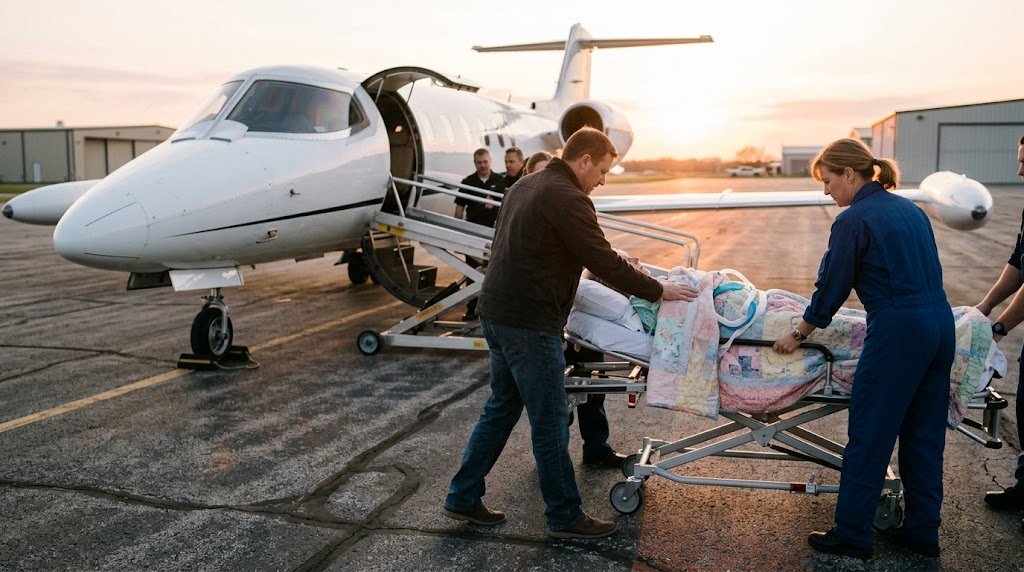 Families choose comfort-focused flights for many reasons. Some of the most common:
- A loved one became seriously ill while traveling and wants to return home
- A parent lives far away and wants to spend their last days near children and grandchildren
- A patient wants to die in their home country or hometown
- A patient in a hospital wants to transition to hospice care at home
- Family members can’t travel to where the patient is
- Cultural or religious wishes make being home especially important
These wishes matter, and they’re worth planning for while there’s still time.
Can a Terminally Ill Patient Fly on a Commercial Airline?
Sometimes, earlier in an illness, with a medical escort and the airline’s approval. But commercial travel often isn’t realistic near the end of life. Airlines may require medical clearance for passengers who are seriously ill, and many patients can’t sit upright for hours, manage airports and connections, or go without close symptom control. Pain, breathlessness, and fatigue can make an ordinary travel day unbearable.
For patients who are stable enough, a flight nurse medical escort on a commercial flight or a commercial stretcher on international routes can be an option. For patients who are more fragile, need oxygen or continuous medications, or may decline quickly, an air ambulance is usually the kinder and safer choice.
How Does the Medical Crew Keep a Patient Comfortable in Flight?
End-of-life care in the air follows the same principles as hospice care on the ground. Our crew:
- Continues the patient’s comfort medications, including pain and anti-anxiety medicines, on schedule and as needed
- Provides oxygen to ease breathlessness if the patient’s care plan calls for it
- Positions the patient comfortably and reduces noise and disruption where possible
- Manages nausea, secretions, and restlessness
- Follows the patient’s advance directives exactly as written
- Talks with the family about what they’re seeing and what to expect
The crew is matched to the patient’s needs and can include critical care flight nurses, paramedics, and physicians for the most complex cases. See Who Are the Medical Professionals on an Air Ambulance Team? for more.
What Planning Is Needed for an End-of-Life Flight?
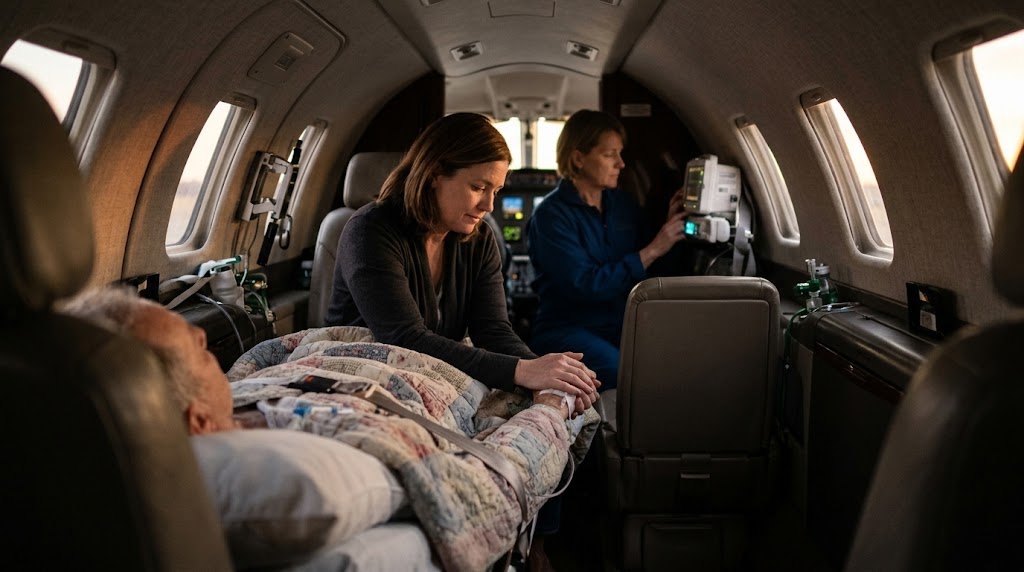
Comfort-focused flights take more coordination than families expect, and starting early makes a real difference. Before the flight, our team works through:
- A medical review with the treating physician about the patient’s condition, symptoms, and how they’re likely to tolerate travel
- Advance directives, such as a DNR order or POLST form, and whether they’ll be recognized where the patient is going. Rules can differ between states and countries, so it’s important to confirm this ahead of time.
- Comfort medications for the trip, including controlled pain medicines, which can have special rules when crossing state lines or borders
- The receiving plan, such as a hospice team, home health care, or a hospital ready to take over on arrival
- Ground transport at both ends, so the patient goes directly from bed to aircraft to bed
- Family travel, including who can fly with the patient
- Travel documents and permits for international flights
Our Medical Director speaks directly with the treating physician before the flight is scheduled. We also talk honestly with families about timing, because when time is short, waiting can mean losing the chance to travel.
What Happens If a Patient Declines During the Flight?
This is one of the hardest questions families ask, and it deserves an honest answer. Some patients near the end of life may decline during travel. Part of our planning is talking through that possibility with the family and the medical team ahead of time, so everyone understands the plan and the patient’s wishes are respected.
The crew will continue to focus on comfort and will follow the patient’s advance directives. Having these conversations before the flight means families aren’t facing unexpected decisions in the moment, and can focus on being together.
Can Family Members Fly With the Patient?
In many cases, yes. On an air ambulance, one or more family members can often travel with the patient, depending on the aircraft size and the medical equipment on board. For many families, being together on the flight home is one of the most meaningful parts of the journey. We confirm seating during planning.
How Does Bed-to-Bed Coordination Help at the End of Life?
Every transfer takes energy a patient may not have to spare. That’s why the fewer, smoother handoffs, the better.
Travel Care Air manages every transition as part of a single plan. We arrange ground ambulances at both ends, coordinate with the receiving hospice, home, or hospital before the mission launches, and keep the same medical team with the patient from the sending bedside to the receiving one. See How an Air Ambulance Transfer Works from Start to Finish.
What If a Loved One Is Dying Abroad?
When a loved one is seriously ill in another country, families often face language barriers, unfamiliar hospital rules, and the fear of not getting home in time. Travel Care Air coordinates medical repatriation across six continents, handling records, permits, the receiving care team, and the flight itself. Learn more in Medical Repatriation Explained, and read how other families made it home in our Mission Stories.
What Does an End-of-Life Medical Flight Cost?
Costs depend on distance, the type of transport, the medical crew needed, and whether the trip is domestic or international. A Travel Care Air quote typically includes the aircraft, pilots, the full medical crew, ground ambulances at both ends, and all logistics coordination, with no hidden fees. We know cost is a hard conversation at a hard time, and we’ll be clear and upfront about it.
Some insurance and travel insurance plans may cover medical transport, while many end-of-life flights are private pay. For more, see How Much Does a Medevac Cost and Financial Options for Families Needing Air Medical Transport.
When Should I Contact Travel Care Air?
As early as you can. If a loved one has said they want to go home, or their care team has started talking about hospice, an early call gives you the most options and the best chance of making the trip while your loved one is able to travel. You can fill out a brief contact form on our website and receive a response within 15 minutes, or call directly: U.S./Canada: 1-800-524-7633 | International: +1-715-479-8881.
Helping Your Loved One Get Home

Bringing someone home at the end of life is one of the most meaningful things a family can do. Travel Care Air treats every comfort-focused flight with the care and dignity it deserves, so your family can focus on being together.
We’re here 24 hours a day, 7 days a week, 365 days a year. Contact us for a free, compassionate consultation or call U.S./Canada: 1-800-524-7633 | International: +1-715-479-8881.
Frequently Asked Questions About End-of-Life Medical Flights
Can a hospice patient fly home?
Yes, in many cases. A hospice patient can often be flown home with a medical crew focused on comfort, either by air ambulance or, for more stable patients, with a medical escort on a commercial flight. The treating physician and our Medical Director decide together whether travel is possible.
What is a comfort-focused medical flight?
It’s medical air transport planned around the patient’s comfort and wishes rather than aggressive treatment, often for people receiving hospice or palliative care who want to be home.
Will my loved one’s DNR order be followed during the flight?
The crew follows the patient’s advance directives. Because rules for recognizing DNR orders and similar forms can differ between states and countries, we confirm this during planning.
Can family members fly with the patient?
Often, yes. One or more family members can usually travel on an air ambulance, depending on the aircraft and the equipment needed.
Can pain medications be given during the flight?
Yes. The medical crew continues the patient’s comfort medications, including pain and anti-anxiety medicines, as directed by their care team.
How quickly can an end-of-life flight be arranged?
Many domestic flights can be organized within 24 to 48 hours once medical clearance and the receiving care plan are confirmed. International flights may take longer, which is why families should call early.
Does insurance cover an end-of-life flight home?
Coverage varies. Some insurance and travel insurance plans cover medical transport, while many comfort-focused flights are private pay. We can provide documentation to support a claim.
Can you bring a loved one home from another country at the end of life?
Yes. Travel Care Air coordinates international comfort-focused flights, including records, permits, the receiving care team, and ground transport at both ends.