
Repatriation medical services move a sick or injured person from a hospital abroad, or far from home, to a facility closer to home, with medical care and supervision the whole way. If someone you love is hospitalized overseas and the local team can’t or won’t continue treatment, this is the service that bridges the gap. It can mean a nurse sitting beside a patient on a commercial flight, or a fully equipped jet with a critical care crew. Which one fits depends on how stable the patient is, how far they need to go, and who is paying.
Travel Care Air has been bringing patients home since 1980, coordinating bed-to-bed transfers across six continents. This guide covers the transport options, the situations that call for them, who pays, how a transfer is arranged, what moves the price, and how to judge a provider.
Need help bringing a loved one home now? Contact Us and a coordinator will reply within 15 minutes.
What Are Repatriation Medical Services?

The term covers the planning, medical staffing, aircraft or ground vehicles, and paperwork needed to bring a patient home safely. People also search for it as medical evacuation, medevac, international patient transfer, or air medical transport. The words overlap, but there’s a rough split. Medevac usually means moving someone urgently to the nearest suitable hospital. Repatriation usually means moving them back to their home country or home region once they’re stable enough to travel. Some situations need both, one after the other.
The service isn’t only a flight. A transfer includes a physician-to-physician handoff, ground ambulances at each end, equipment matched to the patient’s condition, and customs and entry paperwork. At Travel Care Air, we arrange the ground ambulances and confirm the receiving hospital before the aircraft launches, and we work with U.S. Embassies and Consulates when a case needs them. For a deeper definition, see our explainer on what medical repatriation is.
One point worth stating plainly: clinical decisions belong to the treating physician and the transport provider’s medical director, not to a family member, a booking agent, or an insurance clerk. On every case, our Medical Director holds a peer-to-peer call with the treating physician before we recommend a plan. No guide can tell you whether a specific patient is fit to fly, but that conversation can.
What Types of Repatriation Medical Services Are There?

There are four main options. Picking between them is the single biggest clinical and financial decision in the process, and it is the first thing our medical team works out with the treating doctor.
- Air ambulance. A dedicated jet configured for intensive care, with a crew matched to the patient: critical care flight nurses, flight paramedics, respiratory therapists, and physicians when needed. This is the option for ICU patients, ventilated patients, and anyone too unstable for a commercial cabin. Our air ambulance flights leave when the patient is ready, not when an airline schedule allows.
- Commercial stretcher. For patients who must lie flat but are medically stable, such as after spinal injury or recent surgery, the airline converts a block of seats to hold an FAA-approved stretcher, and two medical escorts provide care throughout the flight. Our Commercial Stretcher International service is for international routes and requires airline medical approval case by case.
- Medical escort. A stable patient who can sit upright travels in a first- or business-class seat with a critical care flight nurse or flight paramedic beside them, including low-flow oxygen when needed. Our Flight Nurse Medical Escort service is often the most cost-effective way home for patients who qualify.
- Traveling partner. Some travelers don’t need clinical care in flight but shouldn’t travel alone, often because of mobility limits or a recent injury. A Medical Traveling Partner helps them from door to door and handles the travel arrangements.
A commercial escort or stretcher is the least expensive route, but it comes with airline rules. Airlines may require medical clearance, and a patient who can’t sit upright for hours won’t qualify for a seat. A dedicated aircraft removes those limits and lets the crew take off when the patient is ready rather than when a schedule allows.
Sometimes the decision is closer than it looks. Our breakdown of ground transport versus air ambulance helps when the distance is borderline. As for how safe the higher-acuity options are, the answer depends heavily on crew and equipment. There’s a good overview of air medical transport for critically ill patients if that’s your worry.
When Is Medical Repatriation Needed?
Nobody plans for this. Here are the situations that most often trigger a call to our coordinators.
- Serious injury abroad. A road crash, a fall while hiking, or a diving accident leaves the patient in a hospital that lacks a specialty unit, or where the family can’t communicate with doctors.
- Sudden illness. A stroke, heart event, or severe infection stabilizes locally, but the long recovery or rehab would be better done at home.
- Language and care gaps. The local hospital is competent but the family can’t follow what’s happening, consent forms are confusing, or the patient needs follow-up care that’s hard to arrange abroad.
- Financial pressure. Some foreign hospitals demand payment or guarantees up front, and bills climb fast for a patient without local coverage.
- Specialized needs. Transplant evaluation, oncology continuity, or cardiac surgery planned at a home-country center.
In each case, the question isn’t just whether the patient can fly. It’s whether moving them leaves them better off than staying put. That’s a call for the treating doctor and our Medical Director together, and we will tell you honestly if a flight is premature. If you’re weighing the move right now, our guide on how to bring a loved one home from a foreign hospital walks through the first decisions.
Who Pays for Medical Repatriation?

This is where families get stuck, and it’s worth sorting out before anything else. The payer can be one of several:
- Travel insurance or a travel assistance membership. Many policies include medical evacuation and repatriation, but with limits, exclusions, and a requirement that the insurer approve the transfer in advance. If you move the patient without approval, you may not be reimbursed. Our guide to travel medical and evacuation coverage explains what to look for.
- Health insurance. Some plans cover air ambulance only in narrow cases, and coverage abroad varies a lot. Here’s a plain-language look at whether health insurance pays for an air ambulance.
- Government programs. Medicare generally doesn’t cover care abroad, and domestic coverage has its own rules. See who pays for non-emergency medical transportation for how Medicare, Medicaid, and private plans differ.
- Employers. Companies that send staff overseas often carry corporate assistance plans. Call HR early.
- Self-pay. When nothing else applies, the family pays, sometimes with help from payment plans or other sources. Our article on affordable long-distance medical transportation covers ways to manage the cost without cutting safety.
The practical move is to call the insurer or assistance company first, get the claim number, and ask whether they run the transfer themselves or reimburse you. Some insurers insist on using their own network provider, which affects who you talk to next. Our coordinators can work with your insurer on paperwork and approvals once you have that reference number.
How Does a Repatriation Transfer Work, Step by Step?
The sequence is similar across cases, though the details shift with the patient’s condition and route. Here is how a transfer runs with Travel Care Air.
- First call and intake. You give the patient’s name, diagnosis, current location, and destination. Our coordinator asks about insurance and who the decision-makers are.
- Medical review. Our Medical Director speaks with the treating doctor and reviews records, imaging, and current treatment. This step decides the transport type and whether the patient is fit to travel.
- Quote and authorization. We send a transparent quote based on the plan, with no hidden fees. If insurance is involved, the insurer approves it. If you’re paying, you sign and arrange payment.
- Logistics. Our team books the aircraft and crew, arranges ground ambulances at both ends, files flight plans, secures landing permissions, and confirms the receiving hospital has accepted the patient and has a bed.
- Ground leg and departure. The crew meets the patient at the hospital, reviews the chart, moves the patient onto their equipment, and transfers to the airport.
- Flight. The medical team monitors the patient continuously. Some long flights need a fuel stop, which can add time.
- Handoff. A second ground ambulance takes the patient to the receiving hospital, where the crew gives a clinical report to the accepting team.
For a more detailed checklist of paperwork and timing, see how to arrange international medical repatriation.
How Long Does Medical Repatriation Take?
Honestly, it varies a lot. A straightforward case with approved funding and a ready receiving hospital can move in a day or two. Delays almost always come from the same places: waiting on insurer approval, a receiving hospital that hasn’t confirmed a bed, missing records, a patient who needs another day of stabilization, or entry paperwork for the destination country. If you can line up the receiving physician and gather records while you’re waiting on approvals, you save real time.
For a fuller picture of what this looks like from a family’s perspective, read what to expect when arranging an air ambulance for a loved one.
What Affects the Cost of Repatriation Medical Services?
We don’t publish price ranges for repatriation, because any number without your case in front of us would be misleading. Two patients flying the same route can get very different totals. Our consultation is free, and every quote is transparent with no hidden fees. Here is what moves the price:
- Distance and route. Longer flights cost more, and so do routes that need fuel stops or special landing permissions.
- Aircraft type. A jet with a full intensive care setup costs more to operate than a commercial seat with an escort.
- Crew level. A flight nurse and paramedic is a different expense than a physician, a respiratory therapist, and a second nurse.
- Ground legs. Ambulances at both ends, sometimes across long distances, are billed separately in many cases.
- Equipment. Ventilators, ECMO, incubators for newborns, or bariatric stretchers add cost.
- Waiting time and overnights. If the crew has to stay on the ground or rest because of duty limits, that’s part of the bill.
- Timing. Urgent, short-notice departures can cost more than planned ones.
Ask for an itemized quote, and ask what’s not included. Our guide to international air ambulance cost breaks down what a quote typically covers and where families can save.
How Do You Choose a Repatriation Provider?
You may not get much time to compare, so know what matters. When families ask us how to vet a provider, we point them to five things first.
- Accreditation and licensing. Ask whether the operator holds recognized air medical accreditation and the aviation certificates required for international flights. Don’t accept a vague yes.
- Medical oversight. Is there a named medical director who reviews each case? Who decides if the patient is fit to fly?
- Crew qualifications. Ask who will be on board, what their critical care experience is, and whether they’ve handled your patient’s condition before.
- 24/7 dispatch and response. Emergencies don’t keep office hours. Find out how fast the team can get you a plan and a quote.
- Quote clarity. You want a written, itemized estimate and a plain explanation of what could change it.
A good provider also says no when it’s warranted. If a company promises to fly anyone anywhere without reviewing records, treat that as a red flag. Here’s a longer list of questions to ask before choosing an air ambulance provider, and you can find out who is on an air ambulance medical team so you know what to expect from the crew.
What Is Repatriation of Remains?
The word repatriation also applies to returning a person who has died abroad. This is a separate process from patient transport, and it’s usually handled by a funeral director, a consulate, or a specialist, not a medical crew.
The broad steps are: obtaining a local death certificate, getting the required consular and health authority documents, preparing the body according to the rules of the destination and any airline or carrier, arranging a sealed transport container, and coordinating the flight and receiving funeral home. Requirements differ by country, so start with your embassy or consulate and the funeral director at home. Insurance and assistance plans sometimes cover this, so read the policy carefully.
If you’re grieving, you shouldn’t have to learn all this alone. Ask the consulate for a caseworker and ask the funeral home to coordinate with the foreign side.
What About Children, Infants, and Family Members?
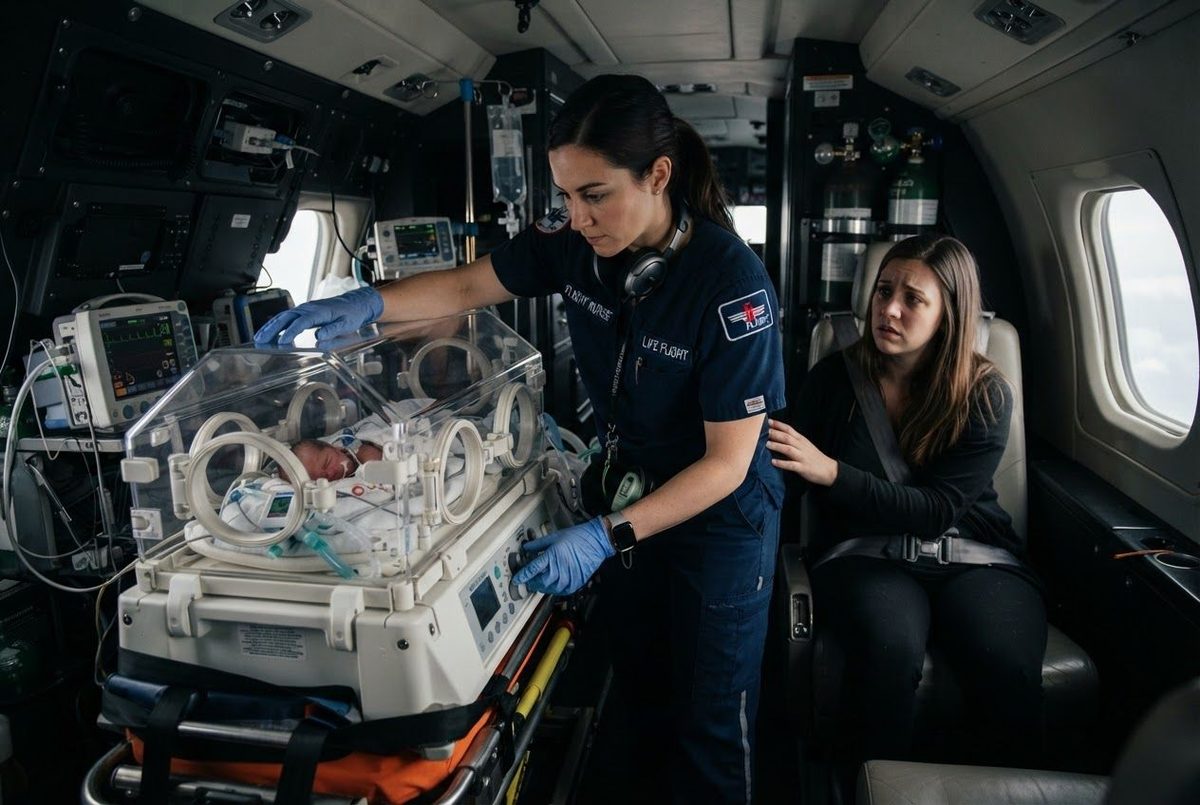
Children and newborns have different needs. A neonatal or pediatric transfer typically requires a team trained for those patients, specialized equipment like transport incubators, and a receiving hospital with a matching unit. Ask any provider directly whether their crew has pediatric or neonatal experience, because a general critical care team may not. Our page on NICU air ambulance transport explains how critically ill newborns are moved between hospitals.
Companions are a separate question. Many flights allow one family member or caregiver to fly, depending on aircraft size, weight limits, and the patient’s condition. Ask early, and confirm that the companion has a valid passport and any visas for the route. If you can’t fly with them, ask who will update you and how often. It’s worth reading how families can stay involved and what to pack for a medical flight before you commit.
What Documents Should You Gather?
Having these ready can shave hours or days off the process.
- Patient passport and any visas or entry permits
- Insurance cards, policy numbers, and the assistance company’s claim reference
- A current medical summary from the treating physician
- Recent imaging, lab results, and medication lists (including allergies)
- Contact details for the treating doctor abroad and the accepting doctor at home
- Consent forms and a legal representative’s details if the patient can’t sign
- Payment authorization or guarantee, if the family is paying
Cross-border moves add customs and entry rules for both patient and aircraft. These articles explain arranging medical transport across borders and how patients are cared for during an international medical flight. When a U.S. citizen is hospitalized overseas, the embassy can also help, and our guide to how embassies coordinate medical evacuation explains that side of the process.
When Should I Contact Travel Care Air?
Call us as soon as the treating doctor starts talking about discharge, transfer, or the limits of local care, even if you don’t know yet which option fits or who will pay. Early contact gives our Medical Director time to review records, gives your insurer time to approve, and gives the receiving hospital time to confirm a bed.
Families have reached us from hospitals all over the world, from a vacation emergency in the Caribbean to a critically ill traveler in China who needed to come home to the U.S. One family wrote that our crew met them at a hospital in Beijing and flew their brother, sedated and on a ventilator, directly to an ICU in New Jersey. You can read more of these journeys in our Mission Stories and see the regions we serve on our Where We Fly page.
Repatriation Medical Services FAQ
Is medical repatriation the same as medical evacuation?
Not exactly. Evacuation usually means urgent movement to the nearest adequate hospital. Repatriation means returning the patient home or to a home-region facility, typically after stabilization. Many cases involve both.
What repatriation options does Travel Care Air offer?
We offer four levels of service: dedicated air ambulance flights, commercial stretcher transport on international routes, flight nurse medical escorts on commercial flights, and medical traveling partners. Our Medical Director and the treating physician decide together which level is safe.
Does travel insurance cover repatriation?
Some policies do, but limits and exclusions apply, and most require prior approval from the insurer. Read the medical evacuation section of your policy and call the assistance number before arranging anything yourself.
Can a patient fly commercially with a medical escort?
Yes, if the patient is stable and the airline approves. Patients who must lie flat may qualify for a commercial stretcher, while patients who need intensive monitoring or rely on a ventilator usually need a dedicated air ambulance.
How fast can a repatriation be arranged?
Simple cases can move within a day or two. Insurer approval, bed confirmation at the receiving hospital, missing records, and entry paperwork are the usual causes of delay.
Can family fly with the patient?
Often one companion can, subject to aircraft space and the medical team’s approval. Ask during your first call.
What if the patient is too unstable to move?
Then the transfer waits. Our Medical Director and the treating doctor will tell you if flying now would put the patient at risk, and they’ll reassess as the patient improves.
Who decides whether a patient is fit to fly?
The treating physician and the transport provider’s medical director decide together, based on records and a clinical assessment. Families and insurers have input, but they don’t make the medical call.
For more about the emotional load of this process, see the emotional side of medical transport. If your concern is a long domestic move, how medical transport works across the U.S. is worth a look. And for the full picture of the flight side of the process, repatriation flight services explains how patients get safely home.
Bring Your Loved One Home With Travel Care Air
Whether your loved one needs an ICU-level jet or a nurse at their side on a commercial flight, our team will match the level of care to the patient and handle every leg from bed to bed. Travel Care Air is available 24 hours a day, 7 days a week, 365 days a year. Contact us for a free consultation and flight quote or call U.S./Canada: 1-800-524-7633 | International: +1-715-479-8881.