
Most people with epilepsy or a history of seizures can fly safely with good planning. But when seizures are new, frequent, or tied to a serious illness or injury, a commercial cabin is a risky place for your loved one to be. This is because there’s no neurologist on board, there is limited room to keep someone safe during a seizure, and no way to give emergency medications if a seizure won’t stop. This is when an air ambulance for seizure patients, with a crew trained to monitor and treat neurological emergencies in flight, becomes the safer choice.
Travel Care Air has coordinated medically supervised flights for patients with complex neurological conditions since 1980. For seizure patients, that means planning around medication timing, sleep, triggers, and what the crew will do if a seizure happens at 30,000 feet. Consultations are free and available 24/7/365. Contact Travel Care Air or call U.S./Canada: 1-800-524-7633 | International: +1-715-479-8881.
Can People With Seizures Fly on Commercial Airlines?
Yes, many people with well-controlled epilepsy fly regularly. If seizures are stable and medications are working, flying is often no more risky than any other part of daily life, as long as the traveler plans ahead.
The issue is when seizures aren’t under control. Many airlines and aviation medical guidelines advise against flying soon after a seizure, often within the first 24 hours, and some airlines may ask for medical clearance. A traveler who has had recent, frequent, or prolonged seizures, or whose seizures are linked to a new brain injury or illness, usually needs medical supervision in the air.
Why Can Flying Make Seizures More Likely?
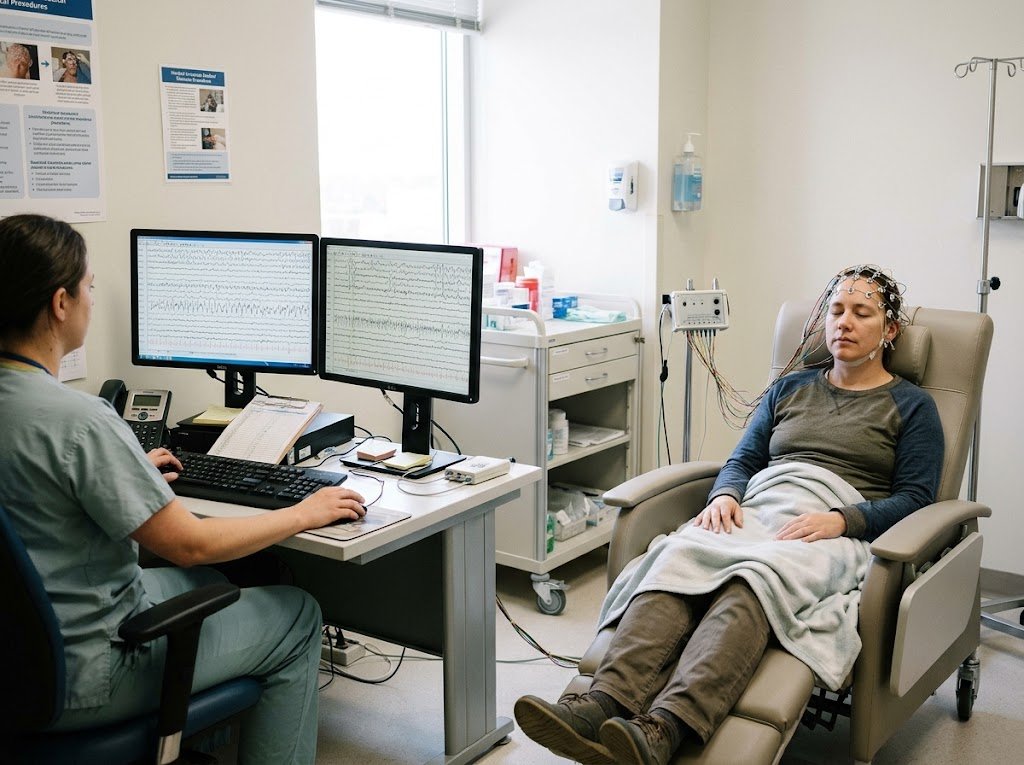 Flying doesn’t directly cause seizures, but travel brings together several well-known seizure triggers:
- Missed or mistimed medication. Time zone changes, delays, and long days make it easy to miss a dose or take it late.
- Sleep deprivation. Early flights, overnight travel, and jet lag are some of the most common triggers.
- Lower oxygen levels. Aircraft cabins are pressurized to the equivalent of roughly 6,000 to 8,000 feet, which slightly lowers blood oxygen. For most people that’s harmless, but in someone with a fragile brain it can matter.
- Stress and anxiety. Airports, security lines, and crowded cabins add stress.
- Dehydration and skipped meals. Long travel days can disrupt eating and drinking, and low blood sugar can be a trigger.
- Alcohol. Drinking during travel can lower the seizure threshold and interact with seizure medications.
For a patient whose seizures are already hard to control, these stacked triggers are a reason to plan carefully, and sometimes a reason not to fly commercially at all.
When Does a Seizure Patient Need an Air Ambulance?
An air ambulance is usually the right choice when a patient needs continuous neurological monitoring or may need emergency treatment during the flight. Common situations include:
- Recent or frequent seizures, especially in the last 24 hours
- Seizures that have been prolonged or come in clusters
- New seizures after a brain injury, stroke, bleed, tumor, or brain surgery
- Patients who are hospitalized and need transfer to a specialized neurology or epilepsy center
- Patients on IV seizure medications who can’t safely switch to pills yet
- Patients who are sedated or on a ventilator after a severe seizure
- Patients stuck abroad after a seizure who need to get home to their own neurologist
What Happens If a Patient Has a Seizure on an Air Ambulance?
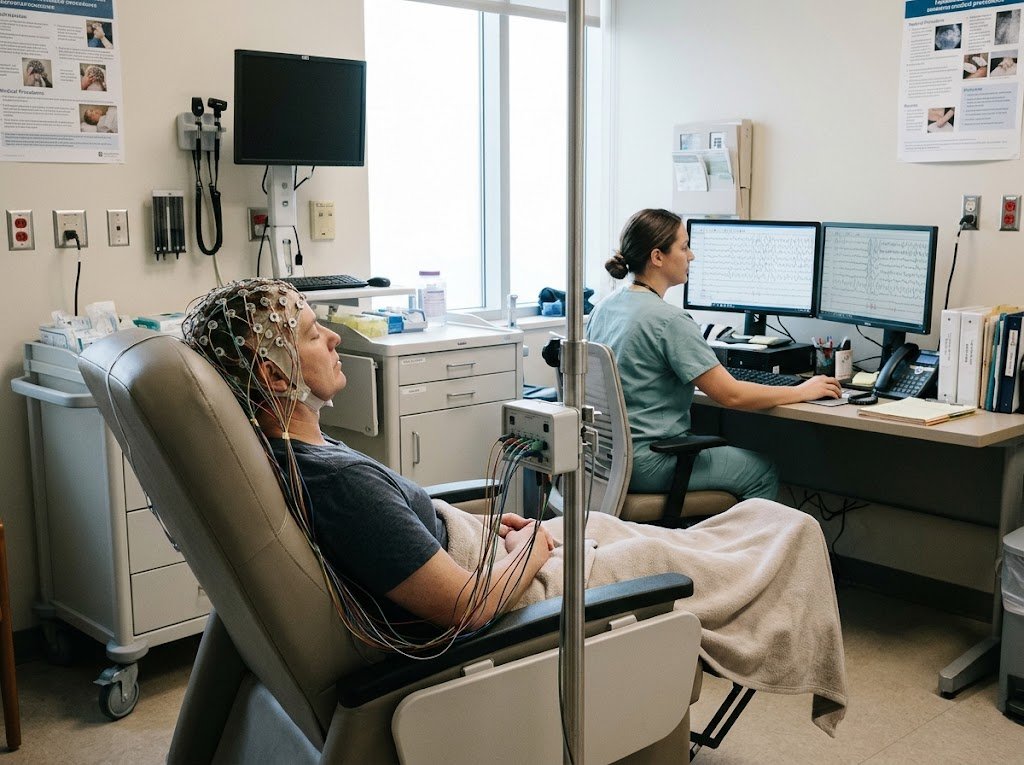
On a commercial flight, cabin crew can offer first aid, but they can’t give emergency seizure medications or manage a patient’s airway if a seizure doesn’t stop. On an air ambulance, the medical crew is prepared for exactly that.
Before takeoff, the crew reviews the patient’s seizure history: what their seizures look like, how long they usually last, what has worked to stop them, and which medications they’re taking. During the flight, they:
- Monitor continuously for signs of seizure activity, breathing changes, and oxygen levels
- Keep the patient secured and padded so a seizure can’t cause injury
- Carry emergency seizure medications and know when to give them
- Support the airway and breathing with oxygen and advanced airway equipment if needed
- Stay in contact with the receiving hospital so the neurology team is ready on arrival
A crew trained in aeromedical care anticipates these situations before they happen and has a plan for each one.
What Are the Options for Seizure Patients Who Need Support?
Not every seizure patient needs a private aircraft. Travel Care Air matches the level of support to the patient:
- Flight Nurse Medical Escort. For patients whose seizures are fairly well controlled but who shouldn’t fly alone, a flight nurse travels with them on a commercial flight, keeps medications on schedule across time zones, and is ready to respond if a seizure happens.
- Air Ambulance. For patients with recent, frequent, or prolonged seizures, or those recovering from a serious neurological event, a private aircraft with a critical care crew provides continuous monitoring and emergency treatment.
The medical review determines which option is safe.
Why Does Every Seizure Patient Need a Medical Review Before Flying?
A medical professional reviews every patient before any transport plan is finalized. For a seizure patient, that review looks at:
- The type, frequency, and length of recent seizures
- The date of the most recent seizure
- Current medications, doses, and timing
- Whether the cause of the seizures is known, such as a brain injury, tumor, or infection
- Recent imaging and test results
- Sleep, nutrition, and other triggers
- What has worked to stop the patient’s seizures in the past
Our Medical Director conducts peer-to-peer discussions with the treating neurologist or physician to decide whether the patient can fly commercially, needs an escort, or requires an air ambulance, and what needs to happen first if the patient isn’t ready.
Who Cares for a Seizure Patient During a Medical Flight?
The crew is matched specifically to the patient’s needs. Depending on the patient’s condition, a Travel Care Air crew can include critical care flight nurses, paramedics trained in advanced aeromedical protocols, respiratory therapists for patients who need airway support, and physicians for the most complex cases. Our crews are trained in advanced cardiac life support, pediatric advanced life support, and pre-hospital trauma care, and pediatric patients get a crew prepared for children’s seizure care. Learn more in Who Are the Medical Professionals on an Air Ambulance Team?
How Does Bed-to-Bed Coordination Help Seizure Patients?
For seizure patients, the riskiest moments are often the transitions: moving from a hospital bed to a ground ambulance, waiting at an airport, or arriving before the receiving team is ready. Every delay is another chance for a missed dose or a long, stressful wait.
Travel Care Air manages every transition as part of a single, coordinated plan. We arrange ground ambulances at both ends, confirm a physician is ready to accept the patient before the mission launches, and keep the same medical team with the patient from the sending bedside to the receiving one.
What If a Loved One Has a Seizure While Traveling Abroad?
A seizure far from home is frightening, especially if the local hospital can’t do the imaging or specialist care needed to find the cause. Many families want their loved one back with their own neurologist as soon as it’s safe.
Travel Care Air coordinates medical repatriation across six continents, handling records, receiving-hospital acceptance, and the flight itself. Learn more in Medical Repatriation Explained, and read how other families made it home in our Mission Stories.
How Can People With Seizures Prepare for Any Flight?
- Talk to your neurologist before booking, especially after any change in seizures or medication.
- Plan medication timing across time zones and set phone alarms.
- Carry medications in your carry-on, with extra for delays, plus any rescue medication your doctor prescribes.
- Protect your sleep: avoid red-eye flights and very early departures when you can.
- Stay hydrated and eat regularly.
- Skip alcohol while traveling.
- Carry a seizure action plan and tell a travel companion what to do.
- Choose an aisle seat and let the cabin crew know about your condition if you’re comfortable doing so.
- Wear a medical ID.
If seizures have been recent or frequent, ask your doctor whether a commercial flight is safe at all.
What Does an Air Ambulance Cost for a Seizure Patient?
Costs depend on distance, the type of transport, the medical crew needed, and whether the trip is domestic or international. A nurse escort on a commercial flight costs significantly less than a private air ambulance.
A Travel Care Air air ambulance quote typically includes the aircraft, pilots, the full medical crew, ground ambulances at both ends, and all logistics coordination, with no hidden fees. For more, see How Much Does a Medevac Cost and Will My Health Insurance Pay for an Air Ambulance?
When Should I Contact Travel Care Air?
Contact us when a loved one with seizures needs to travel and you’re not sure a commercial flight is safe, or when they’ve had a seizure away from home and need to get back to their care team. You can fill out a brief contact form on our website and receive a response within 15 minutes, or call directly: U.S./Canada: 1-800-524-7633 | International: +1-715-479-8881.
We’re Ready When Seizures Make Travel Uncertain

Sometimes a seizure patient just needs a well-timed commercial flight and a solid plan. Sometimes they need a nurse at their side, and sometimes they need a flying ICU with a crew ready to treat a seizure in the air. Travel Care Air will tell you honestly which one fits.
Medical emergencies don’t follow business hours, and neither do we. Travel Care Air is available 24 hours a day, 7 days a week, 365 days a year. Contact us for a free consultation and flight quote or call U.S./Canada: 1-800-524-7633 | International: +1-715-479-8881.
Frequently Asked Questions About Air Ambulances for Seizure Patients
Can you fly with epilepsy?
Yes. Many people with well-controlled epilepsy fly safely. People with recent, frequent, or poorly controlled seizures should talk to their neurologist first and may need a medical escort or air ambulance.
How soon after a seizure can you fly?
Many airlines and aviation medical guidelines advise waiting at least 24 hours after a seizure before flying commercially, and longer after a prolonged seizure or a new diagnosis. Your doctor should make the final call.
Can flying trigger a seizure?
Flying itself rarely causes seizures, but travel combines common triggers like missed medication, sleep loss, stress, dehydration, and slightly lower oxygen levels. Planning around those triggers lowers the risk.
What happens if someone has a seizure on a plane?
On a commercial flight, cabin crew can provide first aid but can’t give emergency seizure medications. On an air ambulance, the medical crew can monitor, protect the airway, and give treatment to stop the seizure.
Can a seizure patient fly with a medical escort?
Yes. A flight nurse medical escort is a good option for patients whose seizures are reasonably controlled but who shouldn’t travel alone.
Can children with seizures be transported by air ambulance?
Yes. Travel Care Air crews are trained in pediatric advanced life support, and the crew is matched to the child’s needs.
Does insurance cover an air ambulance for seizures?
Coverage depends on the plan and whether the transport is medically necessary. Travel Care Air can provide documentation to support a claim.
How quickly can an air ambulance be arranged?
Many domestic missions can be organized within 24 to 48 hours once medical clearance and logistics are confirmed. International transfers may take longer.